What is an eCommerce Enabler? What benefits do Enabler services provide?


According to the Vietnam eCommerce Index (EBI) Report 2025, the country’s eCommerce market reached approximately $32 billion in 2024, growing by 27% and continuing its strong expansion momentum. In this context, participating in eCommerce is no longer optional, it has become a necessity for businesses to capture growth opportunities.
However, in practice, many companies face challenges related to resources, operational expertise, and the ability to coordinate across multiple channels when building in-house systems. This creates a significant gap between market potential and execution capability.
Against this backdrop, eCommerce Enablers have emerged as a strategic lever, enabling businesses to quickly expand sales channels, optimize operations, and drive sustainable revenue growth.
This article provides a comprehensive analysis of eCommerce Enablers, including their definition, operating models, common service categories, benefits and risks for businesses, as well as key considerations when selecting the right partner.
1. What is an eCommerce Enabler?
An eCommerce Enabler is a service provider that offers comprehensive solutions to help businesses implement, operate, and scale their eCommerce activities efficiently without the need to build the entire system from scratch or make heavy upfront investments.
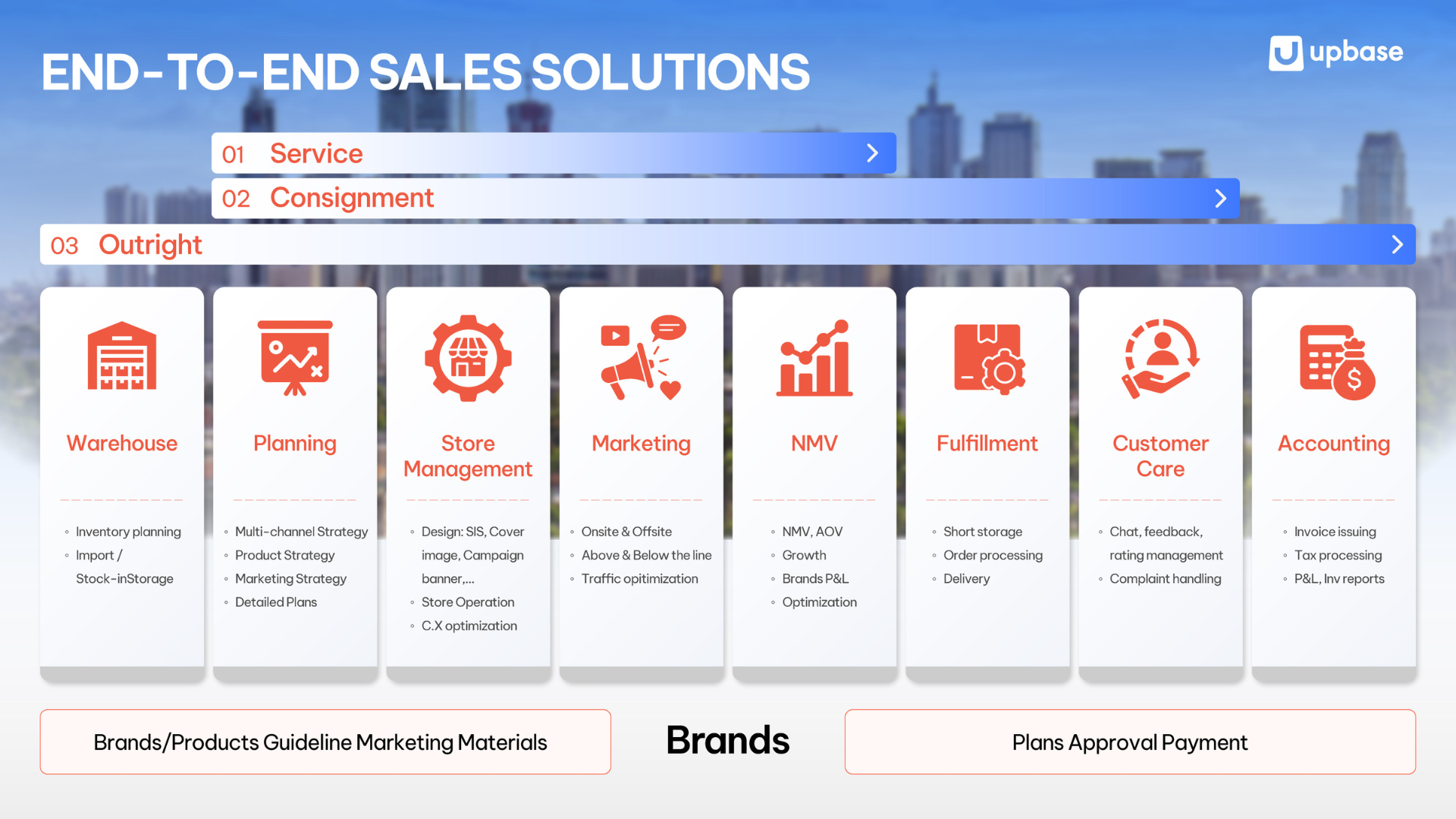
In other words, an enabler delivers an end-to-end service suite, supporting businesses from A to Z in online selling. These services may include: website/store development, store operations and optimization, technology integration, order and inventory management, logistics and fulfillment, digital marketing (SEO, advertising, livestreaming), payment processing, customer service and after-sales support, as well as compliance with legal and tax requirements.
At its core, an eCommerce Enabler acts as an outsourced eCommerce operations team, combining technological capabilities, execution experience, and deep understanding of platforms (marketplaces, social commerce, D2C websites). This enables businesses to shorten time-to-market and minimize operational risks.
2. Comparison between eCommerce Enablers and other eCommerce service models
Within the eCommerce ecosystem, businesses can choose from various support models such as SaaS, 3PL, agencies, or fulfillment services. However, each of these models typically addresses only a specific part of the overall problem, whereas eCommerce Enablers aim to provide a comprehensive, end-to-end solution. Instead of building an in-house team with high costs and specialized expertise, businesses can leverage enabler services to achieve faster, more targeted execution while benefiting from proven experience and existing technologies. Below is a quick comparison:

3. eCommerce Enabler in the eCommerce ecosystem
One of the core values of an eCommerce Enabler lies in its ability to connect different components within the ecosystem. In practice, an eCommerce business often has to work with multiple platforms and tools, including marketplaces, websites, advertising systems, logistics providers, and payment gateways. An eCommerce Enabler not only supports operations but also directly participates in the distribution chain, similar to a distributor in traditional models.

In the outright model, the eCommerce Enabler performs the function of procurement from the Brand (Sell-in), meaning they purchase or receive products and manage inventory. They then handle the sell-out process by distributing products through eCommerce platforms, where items are delivered to end consumers. This approach significantly reduces operational pressure for Brands, particularly in areas such as inventory management, order processing, and store operations.
4. How do eCommerce Enablers help businesses scale?
4.1. Restructuring operations for a B2C model
Many businesses, especially manufacturers or FMCG companies, are originally built on a B2B operating model. When shifting to eCommerce (B2C), they often face structural conflicts, as their existing systems are not designed to handle thousands of small orders per day.
An eCommerce Enabler does more than just support operations, it effectively redesigns the operating model to fit B2C, including:
- Dedicated fulfillment warehouses
- Standardized packaging processes aligned with marketplace requirements
- Fast order processing SLAs (same-day / next-day)
Many brands operating in-house typically process orders within 24–48 hours, resulting in high late delivery rates and reduced platform visibility. With an Enabler, processing time can be reduced to under 12 hours, directly improving ratings and conversion rates.
4.2. Connecting eCommerce platforms
In reality, an eCommerce business does not operate on a single system but across multiple platforms such as Shopee, TikTok Shop, and D2C websites. Each platform has its own operational logic.
An Enabler acts as an integration layer, connecting these systems via APIs, middleware, or OMS/WMS platforms. This is especially critical in scenarios requiring real-time synchronization, such as inventory or order status.
A common case is multi-channel brands experiencing inventory discrepancies between Shopee and TikTok Shop, leading to overselling and platform penalties. Enablers solve this by implementing real-time inventory synchronization, allowing the entire ecosystem to operate as a unified system.
4.3. Orchestrating growth aligned with operations
A common mistake is separating marketing from operations. Businesses may invest heavily in ads but fail to control inventory, fulfillment, or post-purchase experience, resulting in rising costs without proportional returns.
eCommerce Enablers address this by aligning growth across the operational chain:
- Marketing (traffic)
- Merchandising (conversion)
- Fulfillment (delivery experience)
During major campaigns such as mega sales (e.g., 11.11), driving traffic without ensuring inventory and fulfillment capacity can damage operational metrics in the long term. Enablers coordinate between marketing and operations teams to balance both demand and supply.
4.4. Systemization and large-scale automation
As the number of SKUs and sales channels increases, operational complexity grows exponentially. A brand with 1,000 SKUs across 5 platforms must manage thousands of data points (pricing, inventory, images, promotions…).
Manual operations are highly error-prone. Small mistakes (e.g., incorrect pricing) can lead to significant losses. Enablers solve this by:
- Automating updates for pricing, inventory, and campaigns
- Using centralized management systems (OMS, WMS, PIM, etc.)
- Reducing reliance on manual processes
Thus, scaling in eCommerce is driven by technology, not headcount.
4.5. Enabling speed-to-market and experimentation
One of the biggest advantages of eCommerce Enablers is their ability to enable rapid execution and continuous testing.
In a fast-changing eCommerce landscape (especially social commerce like TikTok Shop), spending 3–6 months building internal teams and systems can cause businesses to miss critical market timing. Enablers help by:
- Quickly launching new channels
- Testing products, pricing, and campaigns
- Iterating continuously based on data
For example, brands entering TikTok Shop often need to test dozens of content concepts and product variations before identifying a winning SKU. Enablers, with cross-industry experience, can significantly shorten this process.
4.6. Freeing up resources to focus on core capabilities
Ultimately, the greatest value of an eCommerce Enabler is not in doing everything for the business, but in enabling businesses to focus on what truly matters.
When eCommerce operations are professionally outsourced:
- Internal teams are no longer consumed by order processing or customer complaints
- Resources can be redirected toward R&D, branding, and product strategy
- Businesses can build long-term competitive advantages instead of just processing orders
This is why even large corporations with sufficient internal resources still use Enablers, they understand that operations is a matter of optimization, while true competition lies in products and brand differentiation.
Typical Services of eCommerce Enablers
eCommerce enablers provide a wide range of services to comprehensively support the online sales process. The main service categories include:
- Store Operations Management: For many businesses, listing products on marketplaces is not the main challenge, but operating a store effectively according to each platform’s logic is a completely different problem. eCommerce Enablers are directly involved in this process, from product listing and content standardization (images, titles, descriptions) to setting pricing, inventory, and promotions. Importantly, optimization is not a one-time task but a continuous, data-driven process. During major campaigns, adjusting pricing, product bundles, or gifts is not merely technical - it directly impacts visibility and conversion rates. A well-optimized store can rank higher in search results, generating organic traffic without increasing advertising spend.
- Digital Marketing & Campaign Orchestration: In eCommerce, marketing is no longer just about driving traffic, it is about optimizing conversion and GMV. eCommerce Enablers execute multi-layered campaigns, including on-platform ads (search, display), off-platform ads (Facebook, Google, TikTok), and affiliate/KOL strategies. The key difference lies in orchestration. If a product is heavily advertised but lacks sufficient inventory or is not prioritized by the platform, performance drops significantly. Conversely, when campaigns are aligned with pricing, inventory, and visibility strategies, each marketing dollar delivers higher returns. In practice, leveraging traffic from TikTok to Shopee or Lazada not only increases orders but also improves store ranking, creating a compound growth effect driven by historical performance data.
- Logistics & Fulfillment: eCommerce Enablers operate B2C-focused fulfillment systems, including warehouse management, order processing (pick & pack), standardized packaging, and coordination with logistics partners. They may own or partner with delivery networks (e.g., GHN, Viettel Post). The entire system is designed to handle high order volumes within short timeframes, especially during peak periods. In campaigns like 11.11, the difference between an optimized fulfillment system and a manual one can determine overall business performance. When order volume surges, scalability of warehouse operations, not marketing budget, becomes the critical factor.
- Technology Systems & Omnichannel Management: As businesses expand across multiple channels, data management becomes a major challenge. Any mismatch in pricing, inventory, or product information can lead to operational risks. eCommerce Enablers address this by deploying systems such as OMS (Order Management System), WMS (Warehouse Management System), and PIM (Product Information Management), enabling centralized management. These systems support real-time synchronization, automation of repetitive tasks, and performance dashboards. For example, when adjusting the price of a SKU during a campaign, the update can be applied simultaneously across all channels with a single action, reducing errors and enabling faster responses to market changes.
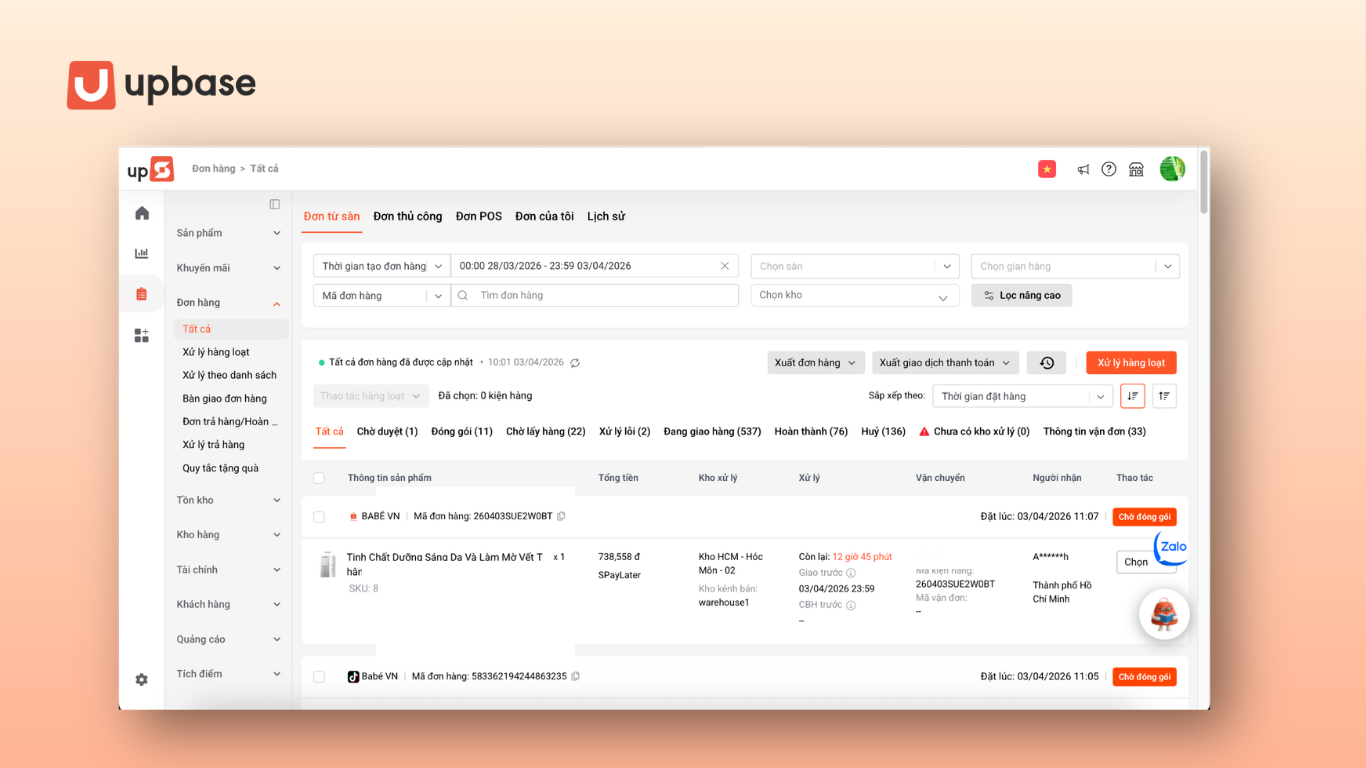
- Brand Management & Channel Development: Beyond operations, eCommerce Enablers also contribute to building brand presence on eCommerce platforms. This includes designing official brand stores, optimizing user experience, and ensuring consistency in visuals, messaging, and pricing. Store management is not just about aesthetics, it directly impacts conversion rates. A well-optimized store layout, content, and trust signals (reviews, certifications) can significantly improve purchase rates, especially in highly competitive categories. Enablers also support pricing and promotion strategies, balancing revenue growth with brand positioning.
- Customer Experience & Support Management: In eCommerce, customer experience extends beyond the point of purchase to post-delivery interactions. Factors such as response speed, complaint handling, and return management directly affect customer ratings and store performance. eCommerce Enablers establish omnichannel customer support systems, including live chat, chatbots, and call centers, ensuring timely responses based on SLA commitments. This is particularly critical during peak periods when message and complaint volumes surge. A delayed response does not just mean losing one order—it can impact the store’s overall operational metrics on the platform.
- Platform Strategy & Partnerships: High-capability eCommerce Enablers go beyond execution—they also act as strategic advisors and platform connectors. Through relationships with platform category managers, enablers can help brands access visibility opportunities, campaign slots, and priority programs. Developing Joint Business Plans (JBP) with platforms not only increases traffic but also creates competitive advantages. At the same time, enablers leverage operational data to provide real-time strategic recommendations rather than simply executing predefined tasks.
- Cross-border Expansion & Compliance Support: When expanding into international markets, legal, payment, and logistics complexities increase significantly. eCommerce Enablers support businesses in handling tax, customs, product standards, and international payment integration. They also assist in localizing content, language, and user experience for each market. A product successful in the domestic market often needs to be adapted to match consumer behavior in new markets. In summary, eCommerce Enablers act as a powerful extension of a business, supporting every stage of the eCommerce value chain.
In summary, eCommerce Enablers act as a powerful extension of a business, supporting every stage of the eCommerce value chain.
eCommerce Enabler Revenue Model
Enabler service fees are typically flexible and depend on the brand’s scale and specific needs:
- Management fee (retainer model): Businesses sign a long-term contract (6–12 months) with a fixed recurring fee, which may be adjusted as services expand. This fee is usually based on store scale (number of SKUs, expected revenue) or service tiers (basic, advanced packages).
- Revenue-sharing model: The enabler takes a percentage of revenue generated from the channels they manage. This model reduces upfront investment risk for new businesses, as fees are tied directly to sales performance. In return, enablers earn a higher share when revenue scales.
- One-time setup cost: At the beginning of a project, there may be initial fees for system setup, store design, and onboarding/training. These costs are typically agreed upon in advance and are non-recurring.
- Trial and demo phase: Many enablers offer a short trial period, either free or at a low cost, allowing clients to evaluate the service before committing to a long-term contract.
In summary, businesses should compare fixed costs versus revenue-sharing models to determine which delivers the best ROI. Pricing should reflect the actual value delivered—choosing the cheapest option is not always optimal if it fails to provide sufficient value.
Risks and Limitations of Working with an eCommerce Enabler
While eCommerce Enablers offer significant advantages in terms of speed and operational capabilities, relying on an external partner also comes with certain risks. These risks do not stem from the model itself, but rather from how businesses select, manage, and structure the partnership:
- Loss of operational control: Businesses may become dependent on the partner and have limited involvement in certain functions (e.g., customer service, PR), which can lead to inconsistent service quality or loss of brand identity.
- Service costs: Although staffing costs may be reduced, businesses still need to pay service fees, which can be substantial. If revenue does not meet expectations, these costs may create financial pressure.
- Dependence on partner capability: If the partner lacks expertise or is not well-suited to the industry, businesses may face slow campaign execution, poor performance, or operational errors.
- Contractual constraints: Long-term contracts can make it difficult to adjust strategies or terminate the partnership when needed.
- Channel conflicts: Businesses may encounter pricing conflicts between direct sales channels and those managed by the enabler. This requires careful handling to avoid customer loss or platform penalties.
- Data security and privacy: Sharing sensitive business data with a third party carries the risk of data leakage or misuse.
In other words, an eCommerce Enabler should be viewed as an operational partner, not a complete replacement. Success depends on how well both sides collaborate, rather than solely on the capabilities of one party.
Key Considerations When Choosing an eCommerce Enabler
As the eCommerce Enabler market becomes increasingly diverse, one of the most important criteria when selecting a partner is proven credibility and execution capability. Instead of relying solely on proposals or promises, businesses should prioritize partners with clear case studies, cross-industry experience, and recognition from major platforms.
Another critical factor is operational and cultural fit. An enabler is not just a vendor but an integral part of the operating system, so alignment in speed, decision-making processes, and level of proactiveness is essential. At the same time, the collaboration model must be clearly defined from the outset, especially KPIs. If only revenue is measured without considering profitability and efficiency, businesses can easily fall into the trap of unsustainable growth.
Finally, rather than looking for a partner to do everything, businesses should choose an enabler that can collaborate and scale alongside them. This is reflected in technological capabilities, the ability to handle sudden spikes in volume, and how they support businesses during transition phases.
In other words, choosing an enabler is not about selecting the best provider, but the most suitable one for the current business context and future growth objectives. It is also important to evaluate partners with experience in similar industries by reviewing their client portfolio and successful case studies, as expertise in FMCG, for example, differs significantly from fashion or electronics.
Breakthrough and Sustainable Growth with UpBase’s eCommerce Operations Solutions: AI & Data eCommerce Partner


UpBase – Top 3 eCommerce Enabler in Vietnam, provides eCommerce operation services (Shopee, TikTok, Lazada, Amazon) along with the UpS operational software solution. As an official and premium partner of major eCommerce platforms such as Shopee, TikTok, and Lazada, UpBase delivers a professional and fast consulting and quotation process. Its team of experienced experts supports businesses in strategy consulting, execution, performance measurement, and store management. UpBase has partnered with 300+ domestic businesses to grow their brands and revenue on eCommerce, as well as supported international brands entering the Vietnamese eCommerce market. Businesses can achieve breakthrough revenue growth through solutions such as KOC/KOL booking, livestream, affiliate, and ads, while ensuring sustainable development through ecosystem solutions like: UpBase TSP Network, UpBase SSP Network, UpBase MCN Network. In addition, UpBase enables centralized management and optimization of multiple eCommerce stores through its UpS technology platform. UpBase has strong expertise across key industries, including Health & Beauty, Mother & Baby, as well as Home & Living, Food, Fashion, and more.
With a vision of building a fully integrated eCommerce operating system, UpBase does not simply focus on driving sales, but addresses the root challenges: connecting data, standardizing operations, and optimizing the entire system for scalability. This is particularly valuable for businesses in the expansion stage, where the challenge is no longer just selling, but operating efficiently at scale. Start optimizing your eCommerce operations today with UpBase!
FAQs
.png)
.jpg)


.svg)

.svg)