Low-code/No-code: The Next-Generation Software Solution for Businesses

.png)
In the past, every idea had to go through IT teams and lengthy development processes that could take weeks or even months. However, in today’s rapidly changing market, such speed is no longer sufficient. Breaking these bottlenecks, Low-code/No-code has emerged and quickly risen as a revolutionary next-generation software solution. No longer constrained by complex programming languages, these platforms empower anyone to design, automate workflows, and deploy applications using intuitive drag-and-drop interfaces. So, what exactly are Low-code/No-code, and how do they work?
What is Low-code/No-code?
Low-code/No-code is a new approach to software development that allows users to build applications, websites, or operational systems with little to no coding required. Instead of programming from scratch using complex languages, users can leverage platforms that provide pre-built functional components and assemble them through intuitive interfaces such as drag-and-drop. In other words, “software development” is gradually shifting from coding to designing logic and connecting ready-made building blocks.
No-code is designed for users without a technical background, enabling them to create fully functional applications without writing a single line of code. In contrast, Low-code retains minimal coding capabilities, making it suitable for developers or technical teams who want to accelerate development. What both approaches share is their ability to significantly reduce deployment time, minimize dependence on programming resources, and expand product-building capabilities to a broader range of users within an organization.
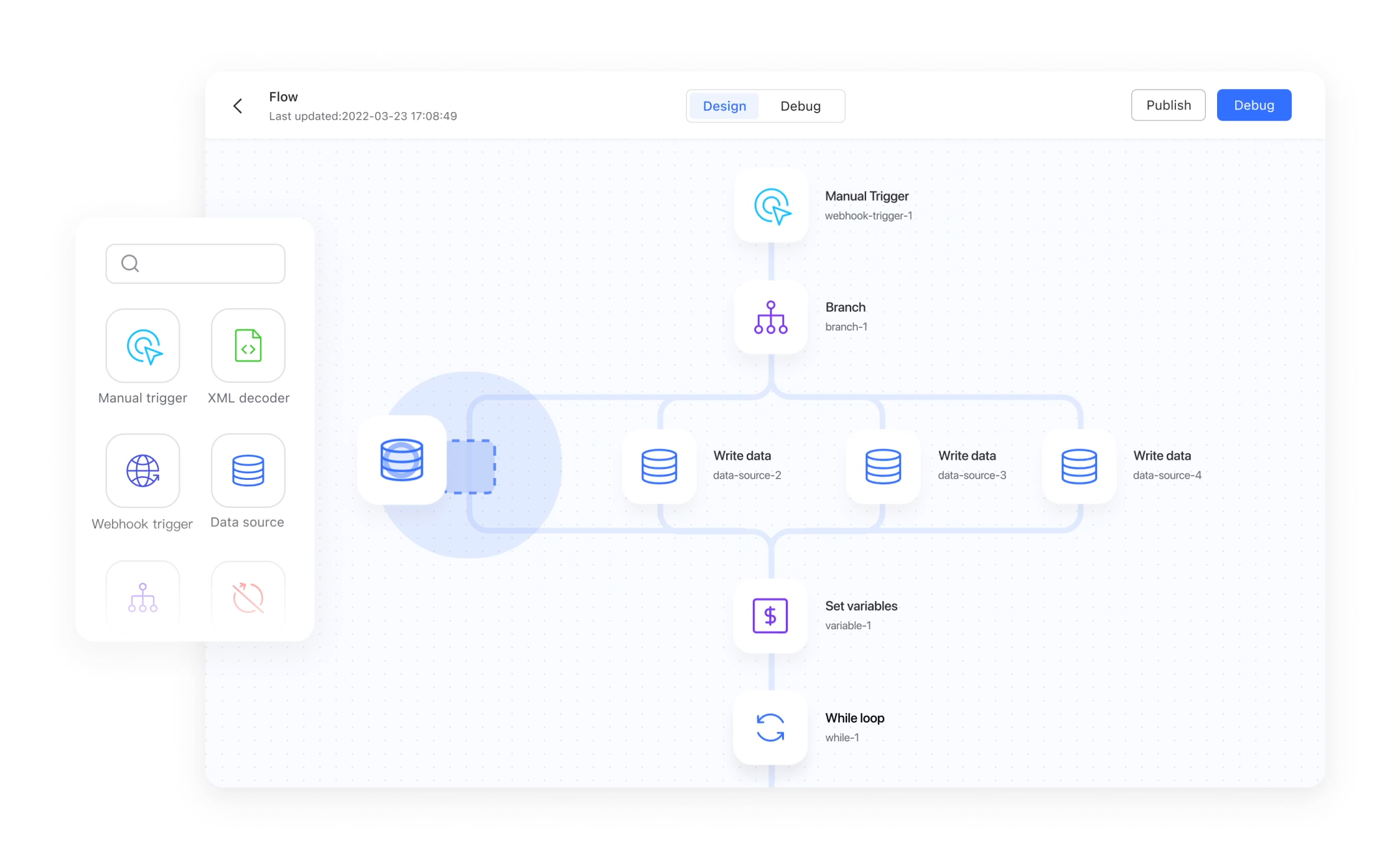
At its core, Low-code/No-code operates like a system of pre-designed building blocks, where users simply select, configure, and connect components to create a complete workflow or application. As a result, tasks such as building landing pages, setting up automated workflows, or creating internal management tools can be executed quickly without going through lengthy traditional software development processes. This is also why Low-code/No-code is increasingly becoming a key part of digital transformation strategies for businesses.
No-code, Low-code, and Full-code
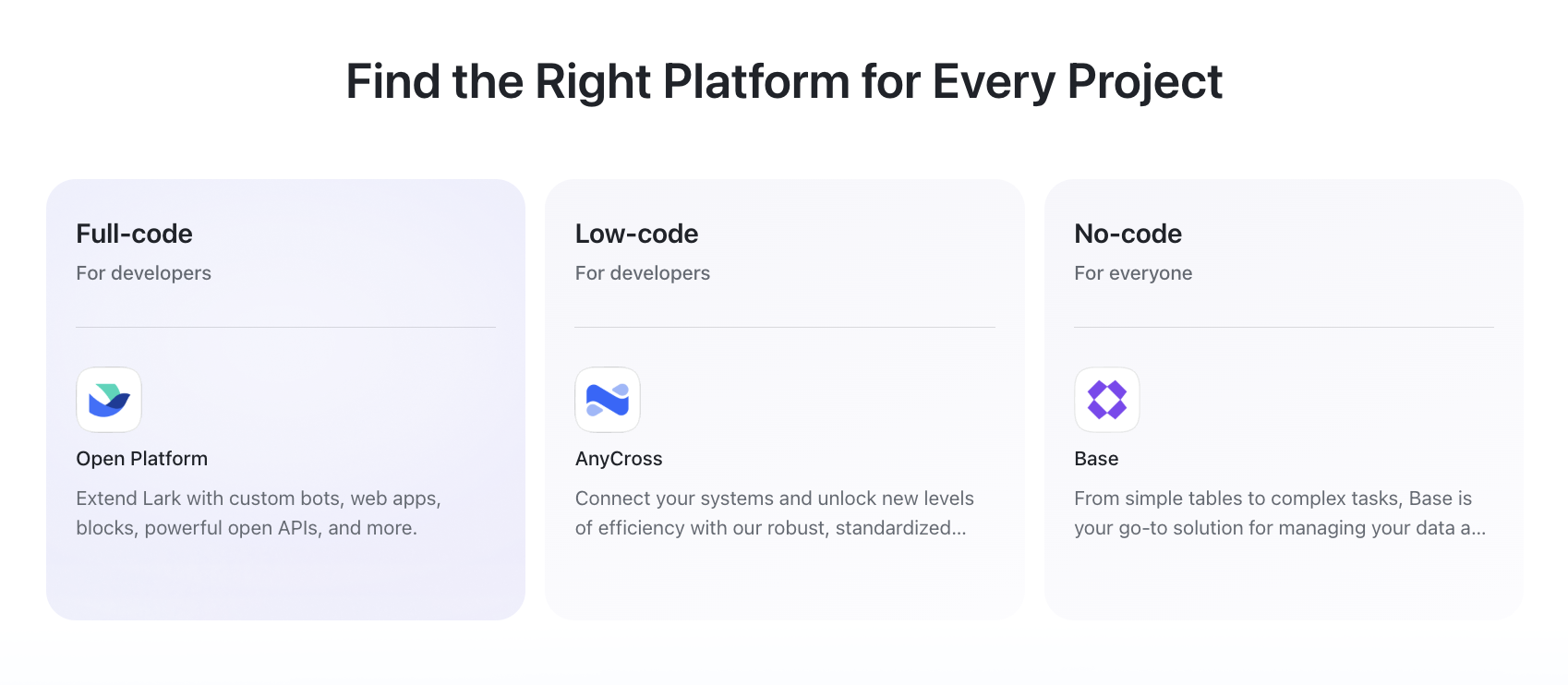
When discussing modern software development approaches, Low-code, No-code, and Full-code are not mutually exclusive choices. Instead, they exist on the same spectrum, ranging from simple to complex, and from intuitive to deeply technical.
.png)
No-code sits at one end of the spectrum, where applications are built entirely through drag-and-drop interfaces and pre-configured elements. Users do not need to write code or understand the underlying system. This allows anyone within an organization, from marketing and operations to sales, to create tools such as landing pages, workflow automations, or basic dashboards. However, due to the lack of code-level access, No-code solutions are often limited in customization and scalability.
Low-code occupies the middle ground, acting as a bridge between business and technical teams. Users can leverage pre-built components for rapid development, similar to No-code, while still having the ability to write code when needed for customization or system extension. As a result, Low-code balances speed with flexibility. It is a popular choice for businesses that want to quickly experiment (e.g., prototypes, MVPs) while maintaining a long-term development roadmap.
Full-code (traditional programming) lies at the other end of the spectrum, where everything is built from scratch using code. This approach offers maximum control over system architecture, performance, security, and scalability. However, it comes with higher costs, longer development timelines, and the need for highly skilled technical teams. Full-code is typically used for core systems, where stability and customization are critical.
From a business application perspective, it can be simply understood as follows: No-code is suitable for quickly building simple solutions, Low-code helps accelerate development while maintaining control, and Full-code is used to build complex, long-term systems.
Rather than choosing just one approach, modern businesses often combine all three: using No-code and Low-code to speed up operations and experimentation, while retaining Pro-code for core platforms that require high stability and scalability.
With Lark, this approach is clearly realized. Depending on goals, resources, and complexity, businesses can flexibly switch between Full-code, Low-code, and No-code to achieve optimal efficiency. From quickly building workflows and managing data with Base (No-code), to integrating and automating systems with AnyCross (Low-code), or developing deeply customized solutions through the Open Platform (Pro-code), everything can be implemented within a single ecosystem.
More importantly, businesses are not locked into a fixed path, they can continuously adapt their approach based on specific needs, ensuring both current efficiency and future scalability.
Practical Applications of Low-code/No-code in Businesses
Internal Operations
In many organizations, most friction does not come from strategy but from fragmented internal processes: approvals via email, task tracking through Excel files, and scattered information across multiple sources. Low-code/No-code helps standardize these processes into clear, logical, and trackable workflows, such as:
- Task management systems
- Approval workflows
- HR management and employee onboarding
- Document and internal data management
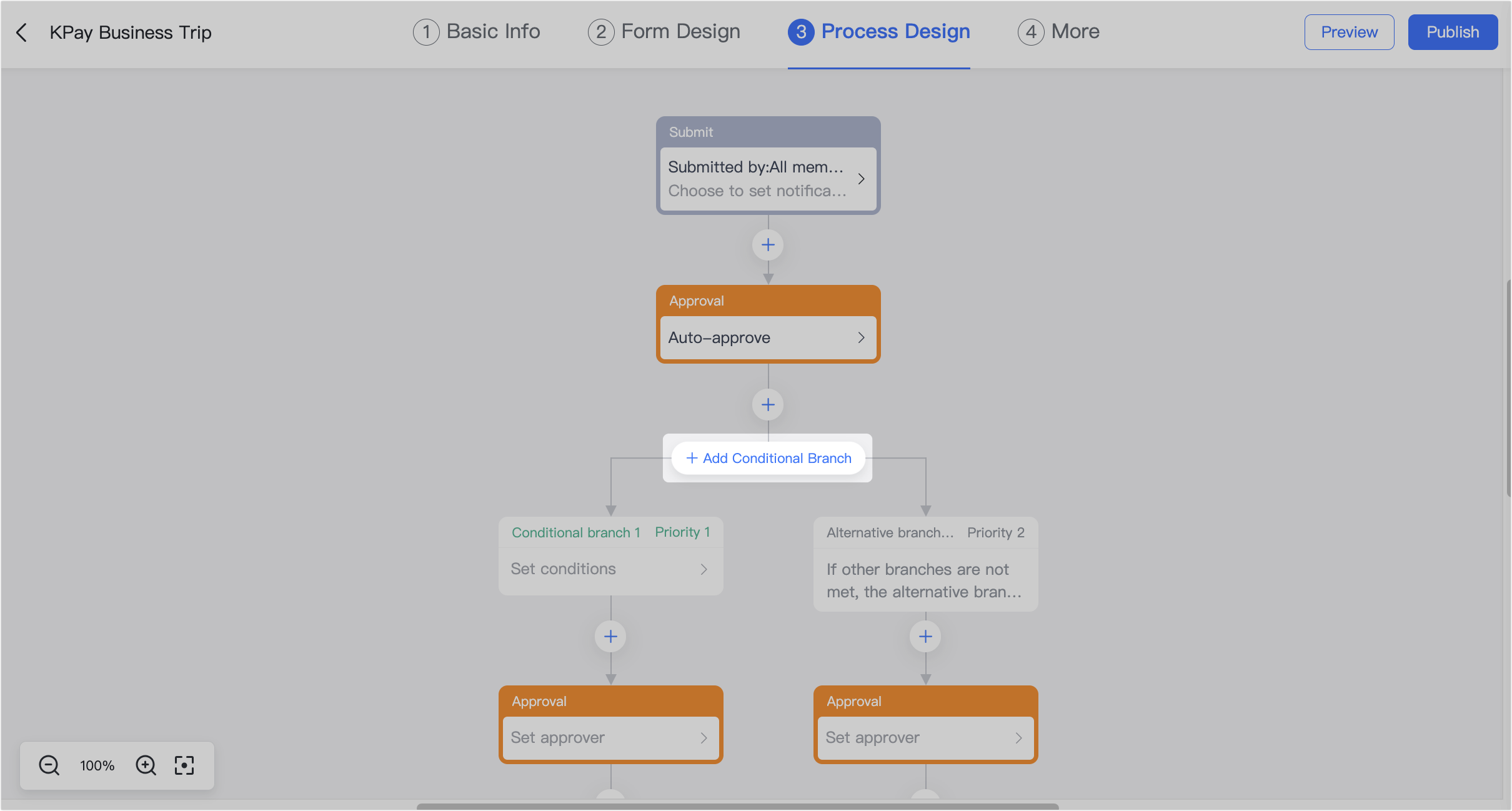
Instead of relying on individuals to remember and handle tasks manually, businesses can design automated operational flows. The real value here is not just time savings, but also reducing errors and creating a scalable operating system.
Workflow Automation
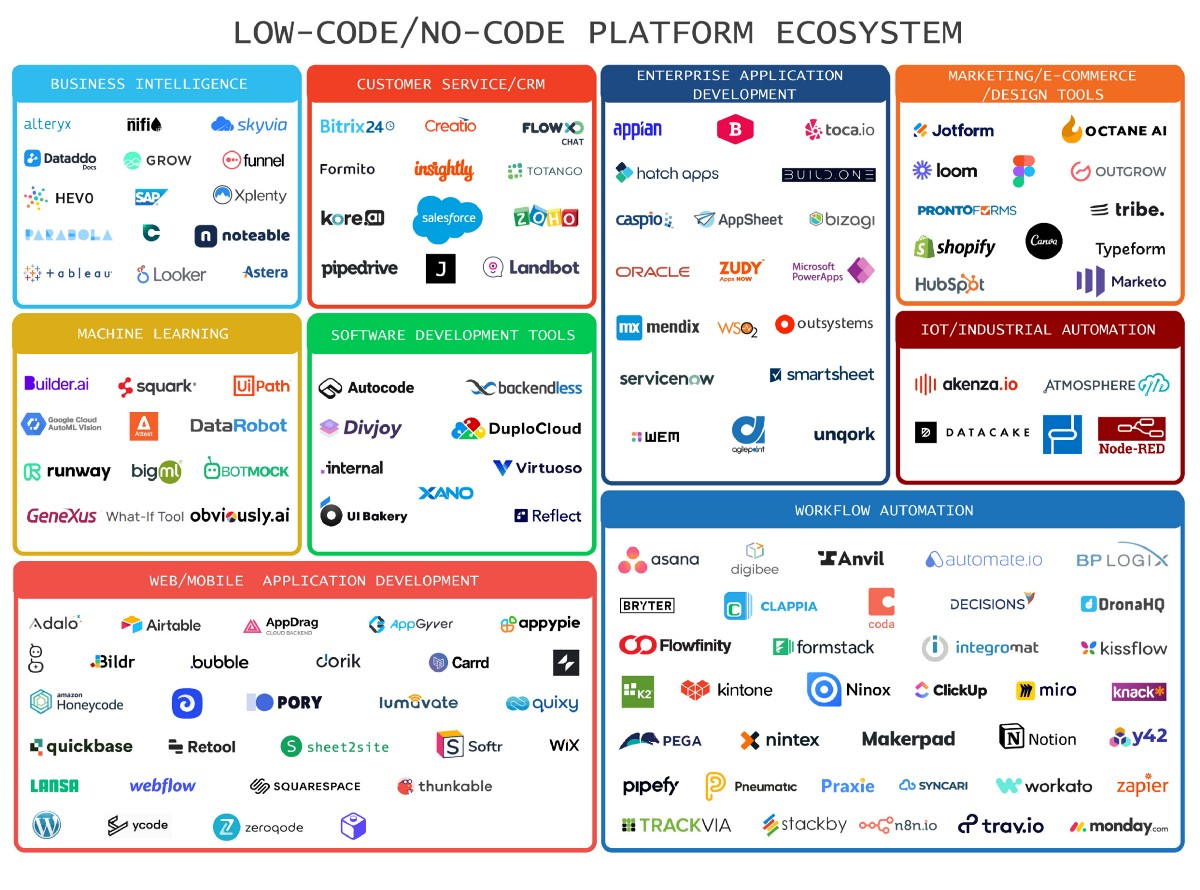
One of the biggest bottlenecks in modern businesses is that data is scattered across multiple tools that do not communicate with each other. Low-code/No-code addresses this by enabling system integration and automated triggers. For example, when a new lead is generated from a landing page, the system can automatically push it into the CRM, send a follow-up email, create a task for sales, and update the status, all within seconds. What truly matters is not automating a single task, but the ability to build a chain of interconnected actions, allowing businesses to operate smoothly without manual intervention at each step. Popular tools in this space include Zapier, Pipefy, Kissflow, and others.
Marketing & Growth
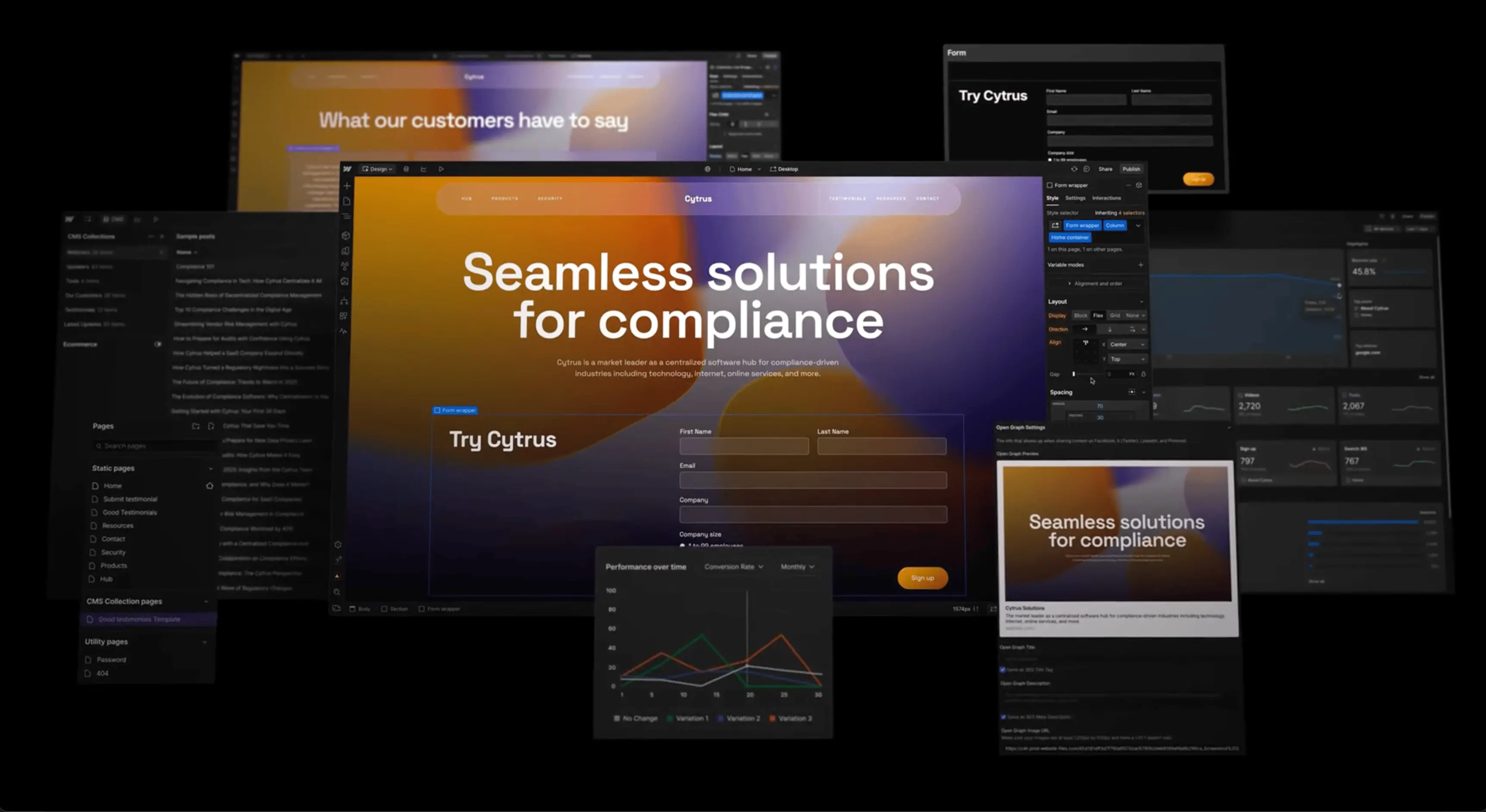
In marketing, speed is almost a deciding factor. Waiting for technical teams to deploy a landing page or adjust a flow can cause businesses to miss opportunities. Low-code/No-code empowers marketing teams to build, test, and optimize campaigns in real time. Tools such as Webflow, Shopify, Mailchimp, and Klaviyo allow marketing teams to manage the entire funnel independently, without relying on developers.
Data Management & Dashboards
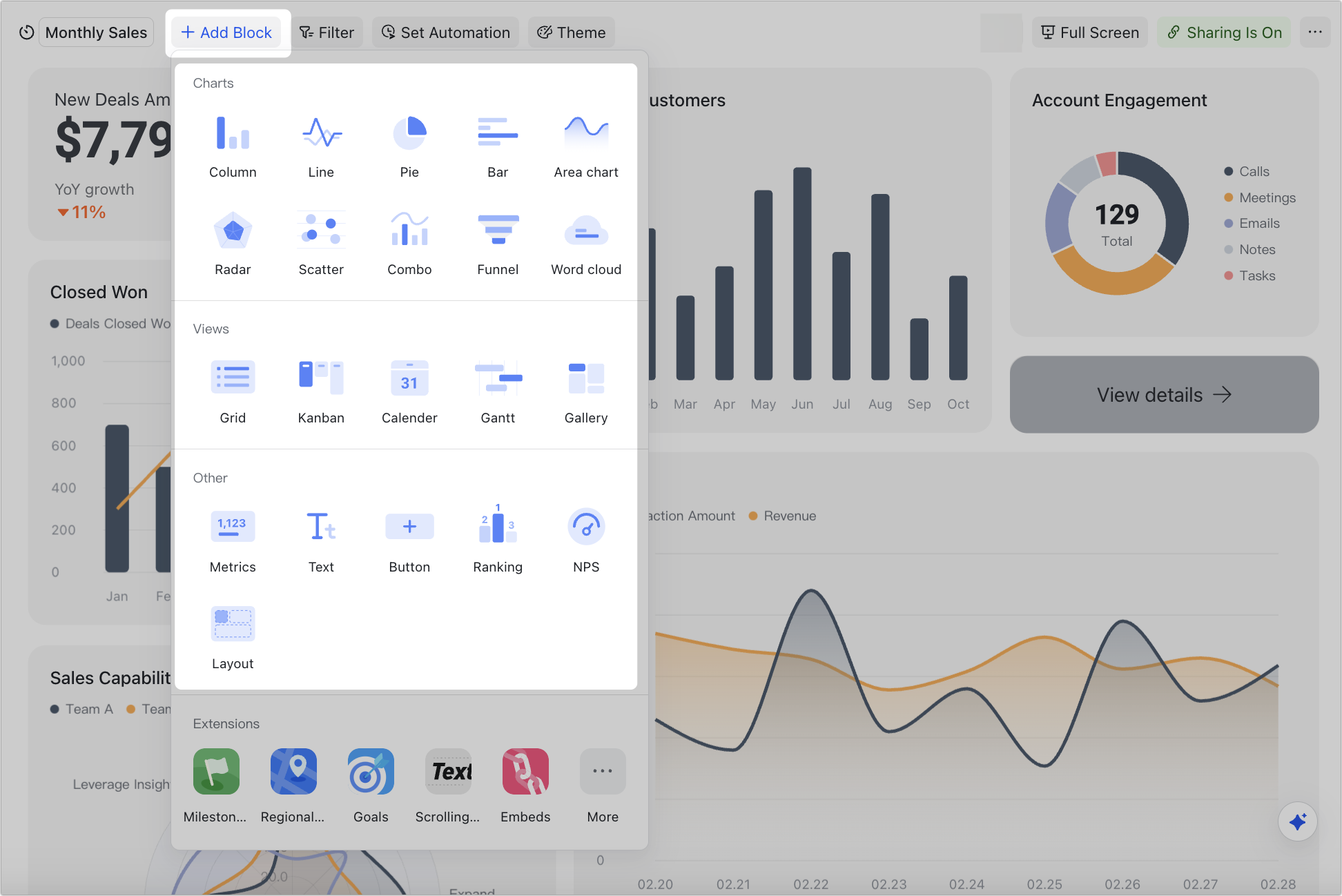
Data is not lacking, the challenge is that businesses often cannot see the big picture because data is spread across multiple sources. Low-code/No-code enables data aggregation, processing, and real-time visualization into dashboards without the need for complex BI systems. Instead of waiting for weekly reports, teams can monitor performance hourly and make immediate adjustments when needed. Popular platforms include Google Data Studio, Power BI, Tableau, and others.
Product Prototyping & MVP Development
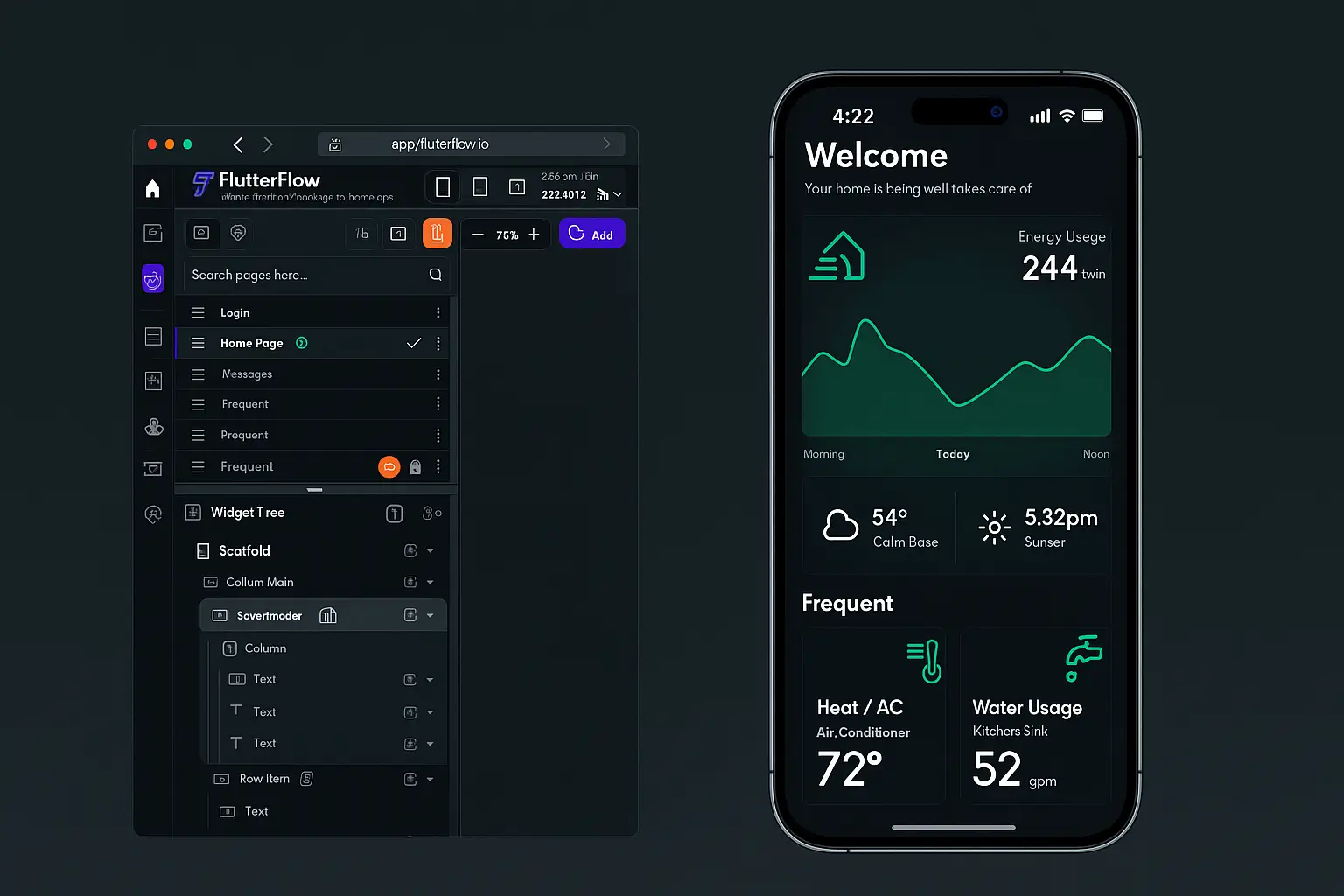
One of the most valuable applications of Low-code/No-code lies in the idea validation phase. Instead of spending months building a complete product, businesses can quickly create an MVP to test market demand. This significantly reduces the risk of building something customers don’t need. More importantly, it shifts the product development mindset, from build first, then test to test before building. As a result, Low-code/No-code becomes a strategic decision-making tool, not just a technical one.
System Integration
In many organizations, each department uses different systems, leading to fragmented data and synchronization challenges. Low-code enables these systems to be connected without building integrations from scratch. For example, data from a website can automatically update the inventory management system, send information to accounting, and update customer status simultaneously. Platforms in this category include Retool, Appian, OutSystems, and others.
Why is Low-code/No-code becoming an inevitable trend?
The rise of Low-code/No-code is not simply because technology has become easier, but because of the increasing pressure on businesses to move faster and adapt more quickly. In today’s environment where things change weekly or even daily, relying entirely on traditional software development processes is no longer practical. Businesses cannot afford to wait months just to deploy a landing page, a workflow, or an internal tool while the market is already shifting in real time.
At the same time, the gap between business and tech is becoming more pronounced. Departments like marketing, operations, and sales clearly understand their problems but lack the ability to build solutions themselves. Meanwhile, technical teams have the capability but are often overwhelmed with backlogs and long-term priorities. Low-code/No-code emerges as a bridge layer, enabling business teams to experiment, deploy, and optimize solutions at a basic level without fully depending on developers.
Another key factor is the shift in operational mindset. Instead of building perfect systems from the start, businesses now prioritize test fast, fail fast, iterate fast. Low-code/No-code aligns perfectly with this approach by allowing rapid creation of MVPs, reducing risk and optimizing resources before committing to large-scale development.
Finally, the widespread adoption of SaaS platforms and integrated ecosystems has accelerated this trend. As tools become readily available and easily connected, value no longer lies in building everything from scratch, but in effectively combining and operating existing solutions.
In this context, Low-code/No-code is not just a technological solution, it has become an essential part of digital transformation strategies, enabling businesses to move faster, stay flexible, and optimize costs in the long run.
The Future of Low-code/No-code
Low-code/No-code is not a short-term trend, it is gradually becoming a core part of how businesses build and operate systems. As pressure around speed, cost, and adaptability continues to increase, building everything from scratch will no longer be the default choice. Instead, businesses will move toward a flexible hybrid model of building and assembling, where Low-code/No-code plays a central role.
One of the most noticeable shifts in the future is the transfer of power from technical teams to business units. Those who understand the problems best: marketing, operations, product will increasingly be able to build solutions for themselves, rather than relying on multiple layers of requests. This does not diminish the role of developers; instead, it pushes them toward higher-value work such as system design, architecture optimization, and solving complex problems.
At the same time, the combination of Low-code/No-code and AI will open up an entirely new phase. Instead of manually dragging and dropping components, users may simply describe their requirements in natural language, and the system will automatically generate applications, workflows, or dashboards. This not only lowers technical barriers but also significantly shortens the gap between idea and execution. However, as building becomes easier, the challenge will shift toward designing the right logic and operating systems effectively.
Another important trend is the emergence of digital stacks built on Low-code/No-code. Businesses will no longer rely on a single system but will instead use multiple specialized tools connected into an ecosystem. In this model, the ability to integrate and automate becomes the key differentiator, rather than the standalone features of individual tools.
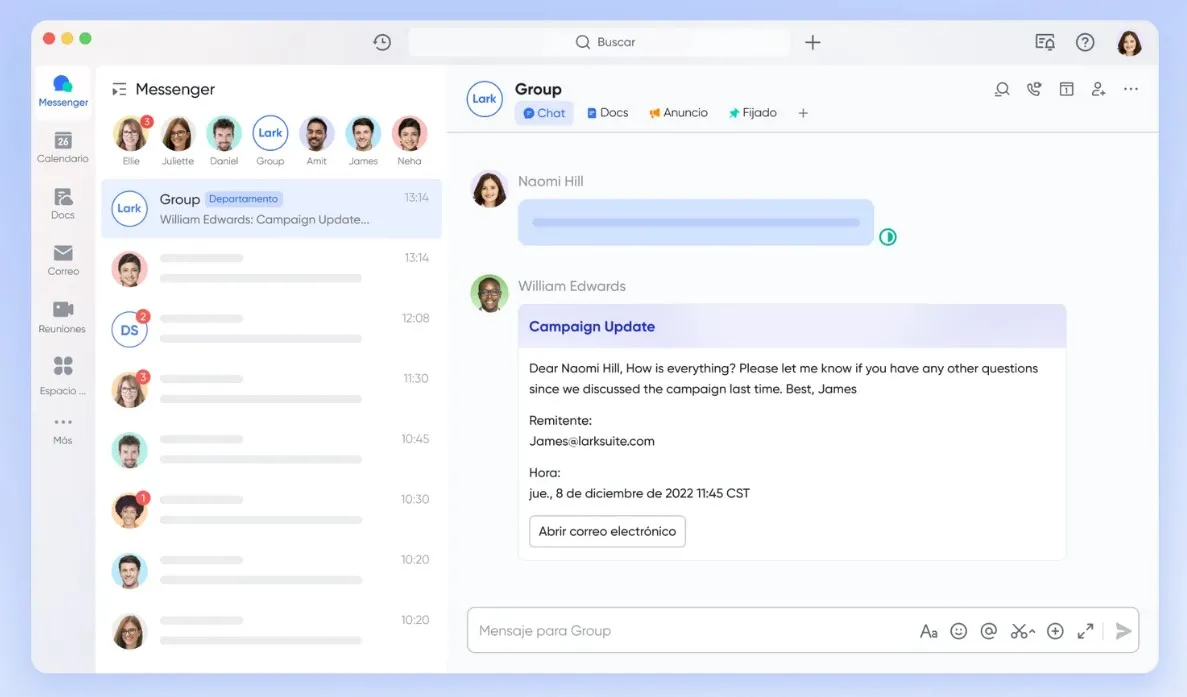
Finally, the labor market will also evolve accordingly. Alongside traditional developers, new roles will emerge such as Low-code Engineers or Automation Specialists, professionals who may not require deep coding expertise but are capable of designing systems, integrating tools, and optimizing workflows. These roles act as a bridge between business and technology, and will become increasingly important in modern organizations.
Challenges in Implementing Low-code/No-code in Businesses
Low-code/No-code enables faster deployment, but in practice, the challenge is not whether it can be done. It’s how to ensure the system operates effectively and sustainably. As tools become more accessible, the problem shifts from technical execution to system design and process governance.
Process Design Challenges
While drag-and-drop and workflow creation can be done quickly, designing the right process from the start is far from simple. If the logic is unclear and steps are not standardized, the system may work but not be usable in practice.
In many cases, each department builds its own workflows based on its own understanding, leading to overlapping processes, inconsistencies, and lack of control, especially when there is no unified design framework across the organization.
Tool Fragmentation
When businesses use multiple No-code tools, each solving a different problem, the system can easily become fragmented. Data is scattered, processes are disconnected, and there is no single source of truth.
This makes monitoring, controlling, and optimizing more difficult, particularly as the business scales and the number of tools increases.
Lack of System Thinking
Low-code/No-code empowers multiple teams, but not everyone has a system design mindset. Building separate components without a holistic view can lead to:
- Broken logic between steps
- Inefficient workflows
- Duplicate data and functions
Over time, the system becomes harder to scale and optimize, even if it was quick to deploy initially.
Governance & Access Control
When multiple users contribute to building the system, managing access rights, process changes, and data becomes more complex. Without clear governance mechanisms, businesses may face:
- Uncontrolled changes to workflows
- Data inconsistencies
- Difficulty in tracing issues when problems arise
Dependency on Initial Setup
Low-code/No-code systems are often built very quickly in the early stages. However, without clear direction, businesses may become locked into the initial design. When it comes time to scale or make changes, adjustments can become significantly more complex compared to getting it right from the beginning.
Lark Implementation Solution: A Low-code/No-code Digital Transformation Approach by UpBase
After recognizing both the potential and challenges of Low-code/No-code, one core issue becomes clear: businesses do not lack tools, they lack the right implementation approach. Using multiple platforms in isolation often leads to system fragmentation, while building from scratch requires significant time and resources. This is exactly the gap that UpBase’s implementation solution aims to address.
From our experience in internal deployment and working with numerous businesses on their digital transformation journeys, UpBase has identified a key insight: companies do not just need a system to store data, they need one flexible enough to reflect how they actually operate. This includes the ability to customize pipelines for different sales models, automate approval processes, manage contracts, and track key metrics such as ARR and renewals. Based on these needs, UpBase has developed a digital transformation solution built on Lark Base’s Low-code/No-code platform. Rather than applying rigid templates, the current approach focuses on building systems that align closely with real operational processes, while ensuring seamless integration across departments such as Marketing, Business Development, Customer Service, HR, and Finance within a single platform.
UpBase is currently a Platinum Partner of Lark in Vietnam, the highest level within the partner ecosystem, with proven implementation experience across industries such as eCommerce, retail, manufacturing, and services. Instead of using a one-size-fits-all template, UpBase adopts a customized solution approach, designing systems based on each organization’s operational needs, scale, and growth objectives.
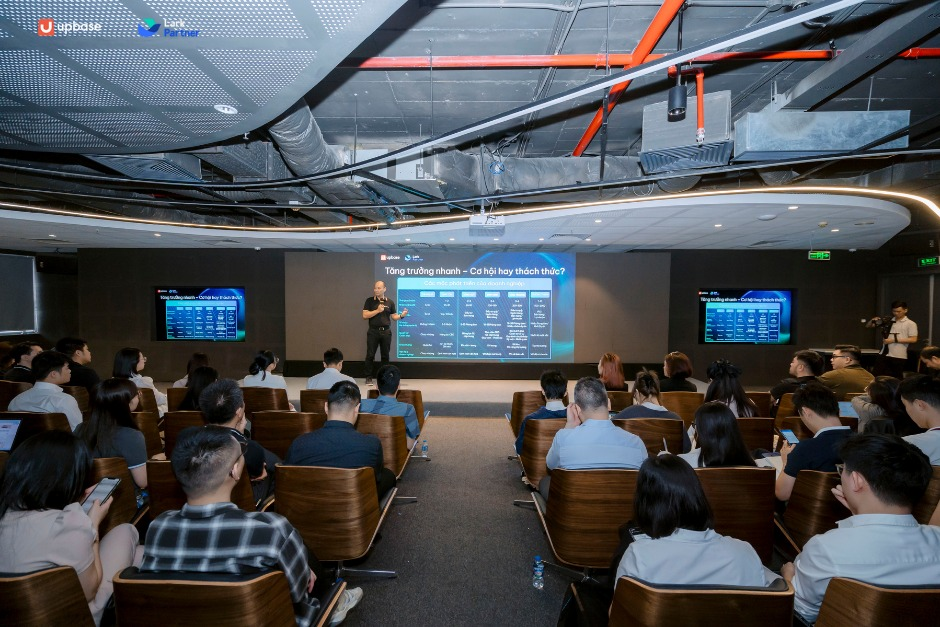
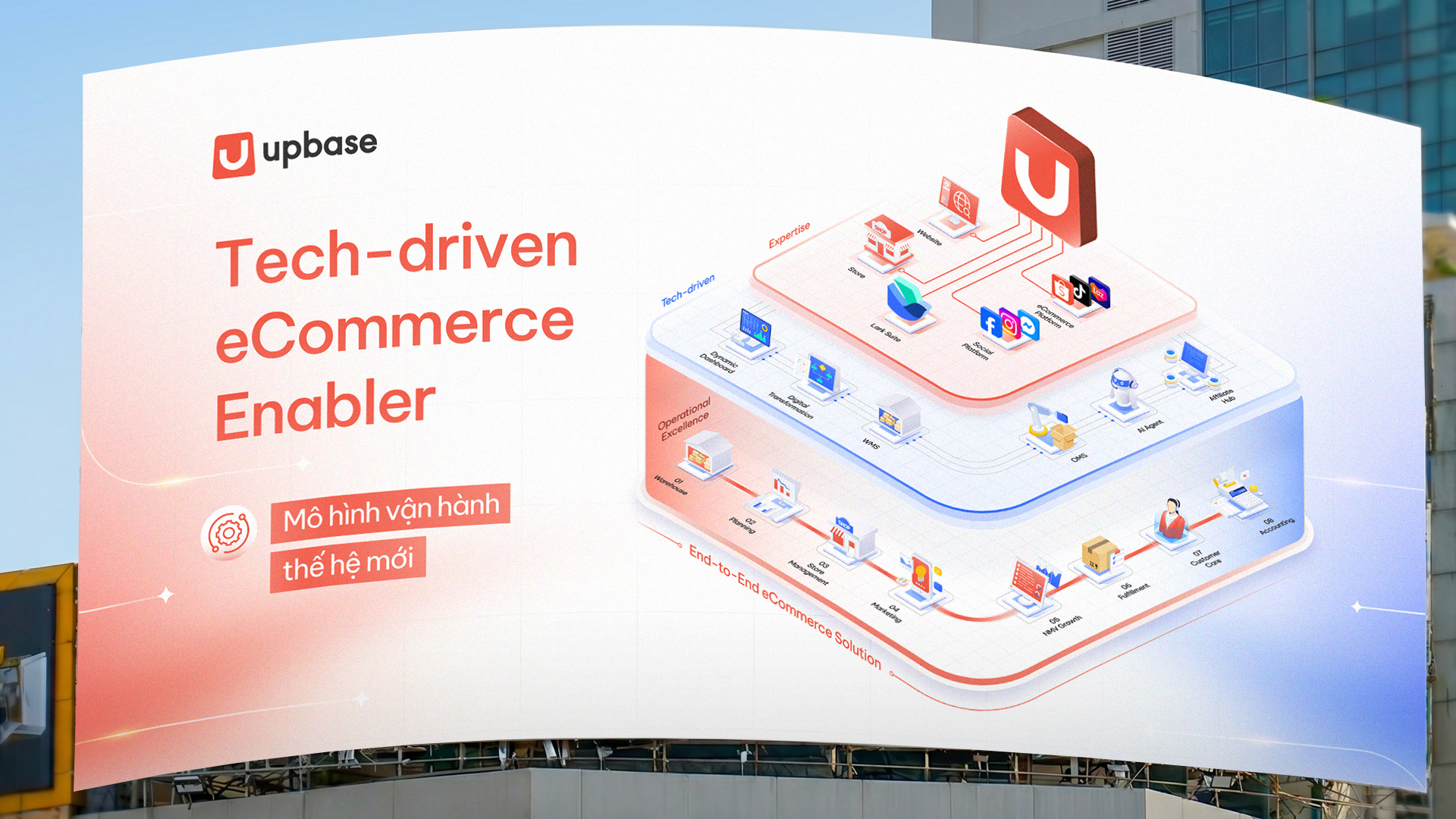
With the Lark platform, UpBase does not just provide tools, we builds a complete digital operating system powered by Low-code/No-code, where data, processes, and people are fully connected within a unified environment.
1. Standardizing operations on a single platform
Instead of using multiple disconnected tools, UpBase helps businesses consolidate all activities into a unified system on Lark, from task management and data to workflows and internal communication. This reduces fragmentation and creates a single source of truth across the organization.
2. Designing workflows based on real business operations
Rather than building systems without direction, UpBase starts by understanding actual business processes, then redesigns them into optimized workflows on Lark:
- Standardizing approval processes
- Automating repetitive tasks
- Establishing seamless data flows across departments
3. System integration & end-to-end automation
Leveraging Lark’s integration and automation capabilities, UpBase enables businesses to build end-to-end operational flows:
- From marketing - sales - operations - reporting
- Synchronizing data across departments
- Automating key triggers
The key difference lies not in implementing isolated features, but in connecting everything into a cohesive system.
4. Continuous support & optimization
Digital transformation is not a one-time project but it is an ongoing process. UpBase goes beyond initial setup by providing system architecture consulting, team training, and continuous process optimization aligned with each stage of business growth, ensuring the system evolves with the organization.

If your business is facing challenges such as fragmented processes, scattered data, or heavy reliance on technical teams, now is the right time to build a flexible and scalable operating system. UpBase is ready to partner with you in designing and implementing solutions on the Lark platform. Contact UpBase for consultation and a tailored demo suited to your business model.
.jpg)


.svg)

.svg)