Content marketing strategy in eCommerce: From traffic to conversion


Vietnam is one of the fastest-growing e-commerce markets in Southeast Asia. Vietnamese consumers spend an average of 6 hours and 38 minutes online each day, with a significant portion of that time spent on social media (DataReportal 2024). More than 60% of online shoppers say they discover new products through social media before making a purchase.
As a result, many businesses are heavily investing in content marketing with the expectation of increasing traffic and expanding their customer base. However, in reality, many brands experience growing view counts without seeing a proportional increase in conversion rates. The main reason lies in content strategies that are fragmented, disconnected from the customer journey, and not directly supporting the purchasing decision process. So, how can businesses design a content marketing system that not only drives traffic but also effectively supports conversions? Let’s explore this in the article below.
1. What is e-commerce content marketing?
E-commerce content marketing is the strategy of creating and distributing valuable, consistent content to attract, educate, and persuade potential customers, ultimately driving purchasing behavior across e-commerce platforms.
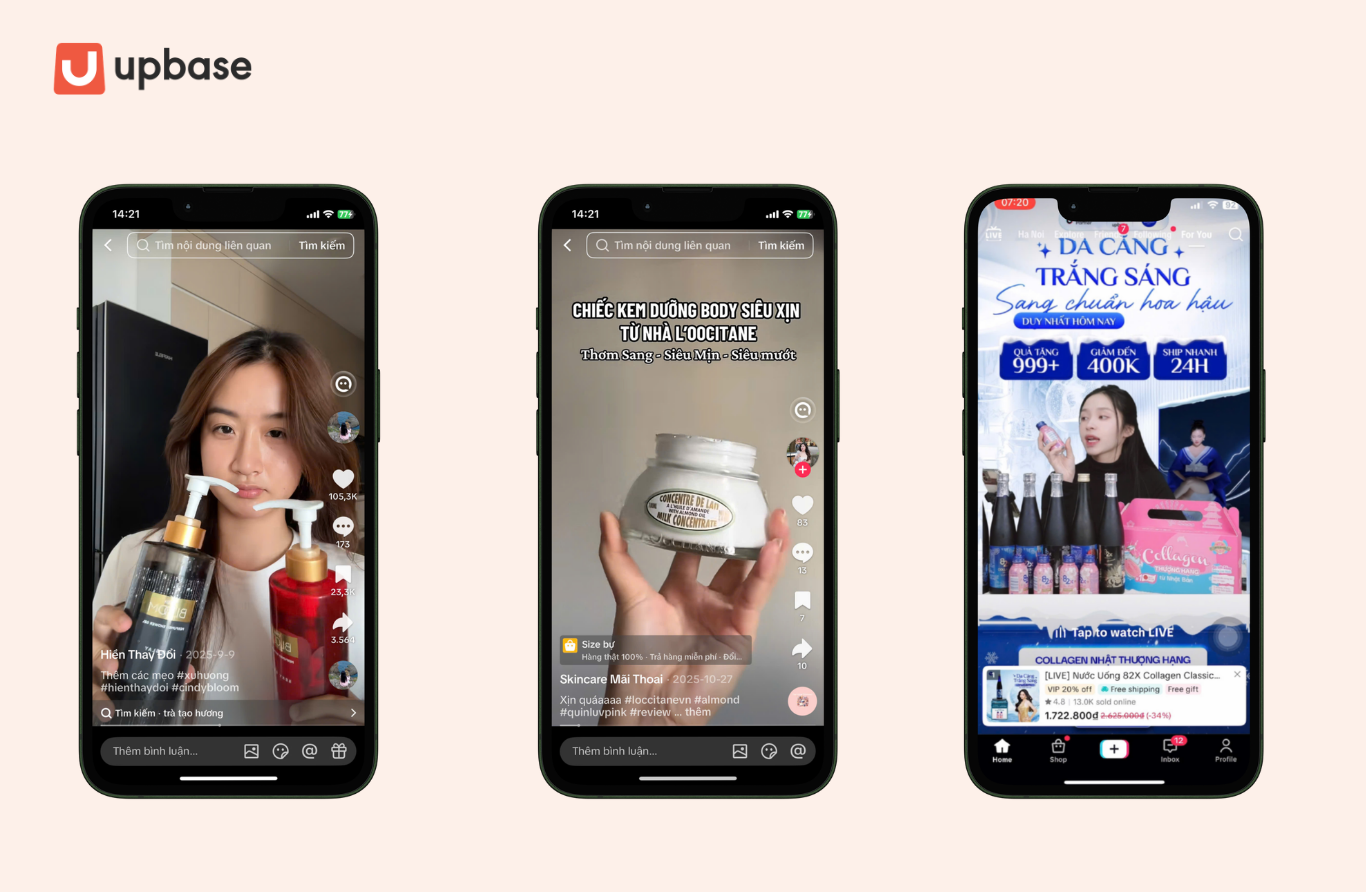
The core difference between content marketing in e-commerce and traditional content marketing lies in its end goal and operational mechanism. Conventional content marketing primarily focuses on long-term brand building and awareness, without necessarily being directly tied to immediate purchasing behavior. In contrast, content in e-commerce must go beyond attracting attention, it needs to actively participate in the sales process by moving users further down the sales funnel and converting them into customers.
In addition, advertising costs (CPM and CPC) on platforms such as Facebook and TikTok have increased significantly in recent years, making complete reliance on paid advertising less sustainable in the long term. At the same time, users are increasingly likely to ignore overtly promotional content and instead prioritize information that feels more natural and genuinely useful. According to the Content Marketing Institute, businesses that implement content marketing strategies acquire customers at 62% lower cost compared to traditional outbound marketing, while generating three times more leads.
Online shopping behavior has also changed considerably. Before making a purchase decision, consumers typically search for information, consult at least 3–5 different content sources, and review feedback from real users. If your brand does not appear across those touchpoints, customers are likely to discover your competitors before they discover you.
2. The See – Think – Do – Care framework for e-commerce content marketing strategies
Developed by Avinash Kaushik (Digital Marketing at Google), the See - Think - Do - Care (STDC) framework was originally designed as a content-centric business strategy model. Instead of segmenting customers based on demographics such as age or gender, this framework approaches customers based on their intent and psychological state.
The model divides the customer journey into four core stages. Applying this framework helps businesses understand that not every piece of content is meant to drive immediate sales. Forcing customers in the SEE stage to jump directly into the DO stage (purchase immediately) is one of the key reasons behind low conversion rates.

When applying the STDC model to e-commerce, where purchasing journeys are often faster and more impulsive, the role of content marketing becomes creating a seamless funnel that guides users from social media platforms to the “Order” button on e-commerce marketplaces:
- SEE Stage: Customers scrolling through TikTok, Facebook Reels, or YouTube Shorts are primarily looking for entertainment and usually have no immediate intention to shop. At this stage, content needs to capture pain points or naturally create new demand in an engaging and entertaining way.
- THINK Stage: Viewers have stopped to engage with your content. They become curious and start visiting your profile or searching for your brand on marketplace search bars. The role of content here is to prove product quality, eliminate skepticism, and provide compelling reasons for customers to choose your store over thousands of competing sellers.
- DO Stage: Customers have already added products to their cart but are still hesitating, perhaps waiting for major sales events or discount vouchers. At this stage, content should create scarcity, urgency (FOMO), and remove barriers related to pricing or shipping costs.
- CARE Stage: On e-commerce platforms, customers can easily switch to competing stores for future purchases if competition is based solely on price. Strong customer care helps businesses build loyal customer communities, while 5-star reviews are also critical for improving organic visibility rankings on marketplaces. Content at this stage should deliver post-purchase value and encourage customers to return to the brand ecosystem.
To transform these stages into concrete customer touchpoints throughout the e-commerce journey, and based on the content objectives at each stage, UpBase categorizes content into six primary types.
3. 6 key content marketing objectives in E-Commerce
Based on the customer journey from brand discovery to becoming a loyal customer, content can be categorized into six core objectives:

- Attract: The goal of this type of content is to expand the customer base by capturing attention within the first three seconds among the massive amount of information users scroll through daily. Common formats include short-form videos on TikTok, Reels, or Shorts that solve problems or follow trending topics; eye-catching product thumbnails on Shopee or Lazada designed with bold colors, visual borders, and large text to increase click-through rates (CTR) when users search for keywords. However, one critical point is that attracting the wrong audience will reduce the effectiveness of the entire funnel, leading to high traffic but low conversion.
- Educate: Once customers are attracted, they need reasons to trust the brand. Educational content provides in-depth information, explains product mechanisms, or guides users in solving specific problems, helping position the store as a knowledgeable product expert. At this stage, content should be detailed, logical, professional, yet easy to understand. Examples include infographic image series in product descriptions explaining ingredients clearly, tutorial videos, or feature comparison videos between product versions to support customer decision-making.
- Entertain: Shoppertainment is becoming a dominant trend, especially on TikTok Shop and Shopee Live. Entertainment content helps retain viewer attention longer and lowers customers’ defensive attitudes toward advertising. Popular formats include experience-sharing videos, storytelling, lifestyle content, or livestreams featuring KOCs/KOLs with engaging personalities to maintain high viewer retention before introducing promotional deals. However, businesses should avoid creating purely entertaining content that lacks connection to the product, as it may generate engagement without contributing to conversions.
- Engage: Engagement content transforms one-way communication into two-way interaction. It helps build small communities around a store, encouraging social media and marketplace algorithms to evaluate the account positively and prioritize visibility. Content at this stage should encourage specific actions such as clicking, viewing product details, adding items to cart, or subscribing. Common tactics include organizing minigames on feeds that require users to comment and share, or creating polls and interactive discussions.
- Convert: This is the stage where content directly impacts revenue. At this point, users are already close to making a purchase but may still hesitate due to concerns about quality, pricing, or perceived risk. Content should focus on reducing perceived risk and creating FOMO through user reviews, authentic product images, transparent policies, and highlighting promotional offers or discount figures.
- Delight: After the purchase, content continues to play an important role in customer retention and increasing customer lifetime value (LTV). This includes post-purchase emails, automated chat messages through marketplace channels, usage guides, related product recommendations, or loyalty programs.
However, in practice, allocating equal resources across all six content types is often a trap that spreads marketing budgets too thin without generating direct results. Depending on product characteristics and target customer behavior, businesses should prioritize different content groups to achieve optimal effectiveness.
For products with complex features, high trust requirements, or large order values such as technology devices, home appliances, or dietary supplement, the focus should be placed on Educate and Convert content. Customers in these categories tend to research carefully before purchasing, so tutorials, detailed reviews, product comparisons, and real-life demonstrations become crucial. Without these types of content, users may not have enough information to make a decision even when clear demand already exists.
In contrast, for low-cost products that encourage impulsive purchasing behavior, such as accessories, snacks, or FMCG products, businesses should prioritize Attract, Entertain, and Convert content. In these cases, content does not need to focus heavily on technical specifications but instead should stimulate curiosity and create a sense of getting a great deal through flash sales or promotions.
For products that rely heavily on aesthetics or emotional trust, such as fashion, cosmetics, or mother-and-baby products, priority should be given to Attract, Engage, and Delight content. Customers in these segments are not only buying products but also purchasing a lifestyle and a sense of trust. Therefore, maintaining two-way interaction, building communities, and providing strong post-purchase customer care create a credibility loop that increases repurchase rates and generates positive marketplace reviews.
From a broader perspective, there are several key principles when implementing content strategies in e-commerce:
- Businesses should avoid spreading resources evenly across all content types and instead define clear priorities based on product categories and industry characteristics.
- Content should be designed as an interconnected flow rather than optimized individually in isolation.
- Brands must maintain consistency between marketing messages and actual product experiences to avoid losing customer trust after purchase.
- Content should be adapted to each platform’s algorithm while still preserving brand identity.
- Continuous A/B testing of thumbnails, headlines, and content scripts is necessary to identify and retain the formats with the highest conversion rates.
5. Measuring the effectiveness of e-commerce content marketing
In e-commerce, the primary role of content marketing is to support sales. Therefore, performance measurement must be directly tied to user behavior and business outcomes. Below is a KPI framework organized according to each stage of the customer journey:
Each KPI group helps measure the effectiveness of specific stages while identifying bottlenecks within the content system, whether the business is attracting the wrong audience, creating content that lacks engagement, building product pages that are not persuasive enough, or delivering a poor post-purchase experience.
6. E-commerce content marketing trends
As e-commerce becomes increasingly competitive and customer acquisition costs continue to rise, content is gradually becoming the center of the shopping experience. Changes in technology and platform ecosystems are driving shifts in consumer behavior, forcing businesses to rethink how they build and operate content strategies.
The boundary between content and shopping is gradually disappearing. Formats such as livestreams and shoppable videos have transformed purchasing into a form of entertainment, often referred to as “shoppertainment,” where users can watch, interact, and purchase simultaneously. On social commerce platforms such as TikTok Shop, the entire customer journey from discovery to conversion can now happen within a single content stream. Meanwhile, e-commerce marketplaces are increasingly integrating short-form video tools directly into their ecosystems.
Consumer behavior is also shifting toward trusting authentic review content created by influential consumers and KOCs. Instead of highly scripted advertisements, content filmed on mobile devices in everyday settings and focused on real user experiences is becoming more effective in building trust and influencing purchase decisions.
Sales livestreaming is evolving from purely promotional broadcasts into a more consultative and educational format. Hosts are increasingly acting as experts who help customers understand product ingredients, technical specifications, and usage recommendations. This approach enhances two-way interaction and supports customers during the product consideration stage.
AI is now being widely adopted to automate e-commerce content production. The technology can assist in generating SEO-optimized product descriptions, creating advertising banners across multiple contexts, and producing large volumes of video scripts. However, the real value of AI lies in its ability to optimize and personalize content based on user data.
The trend of building and managing private communities on platforms such as Zalo, Facebook, or marketplace chat channels is also growing rapidly. These communities allow businesses to provide exclusive content, post-purchase support, and maintain long-term customer relationships after transactions are completed. This model focuses on increasing customer lifetime value and driving repeat purchase rates.
The constantly evolving nature of e-commerce content marketing trends requires businesses to continuously adapt and update their customer engagement strategies. Quickly adopting emerging formats such as in-platform short-form videos, optimizing livestream scripts, or leveraging KOC networks can help businesses maintain competitive advantages and improve conversion performance across e-commerce platforms.
However, building and operating a structured e-commerce content marketing system requires close alignment between strategic thinking and consistent execution capabilities. The comprehensive e-commerce solution from UpBase addresses this challenge by developing optimized content funnels that guide customers from the first touchpoint to final purchase completion.

With hands-on experience across platforms such as Shopee, Lazada, and TikTok Shop, UpBase helps businesses standardize content strategies, optimize store operations, and quickly adapt to the latest trends in order to drive sustainable revenue growth. Contact UpBase for a free consultation!
.jpg)


.svg)

.svg)