Why Do 70% of Digital Transformation Projects Fail? Challenges in Digital Transformation


As businesses face increasing pressure to adapt to the digital marketplace, digital transformation is no longer optional, it has become a matter of survival. However, reality reveals a striking paradox: up to 70% of digital transformation projects fail or fall short of initial expectations. This raises a critical question: why do substantial investments in technology, systems, and data fail to deliver proportional results?
In this article, UpBase will analyze the core reasons behind digital transformation failures, while also highlighting strategic approaches that can help businesses improve their chances of success in a sustainable way.
Read more: Digital Transformation Trends 2026–2030: What Should Businesses Prepare to Stay Ahead?
Key Reasons Why Digital Transformation Projects Fail
According to research by McKinsey & Company, around 70% of large-scale transformation programs fail. Similarly, a global survey by Gartner shows that only about 48% of digital initiatives meet or exceed their objectives, meaning more than half fail to deliver the expected results.
However, based on UpBase’s hands-on experience in consulting and implementing digital transformation across various industries, the root causes of failure do not stem from technology alone. Instead, they primarily arise from a lack of alignment between strategy, people, and execution. Many businesses, despite making significant investments, still fail to achieve desired outcomes due to fragmented implementation, unclear direction, or an inability to manage the transformation process effectively.
1. Resistance to Change from People & Organizational Culture
At its core, digital transformation is not a technology problem, it is a human behavior problem. This is precisely why many projects fail, even when the right tools have been implemented.
A report by Prosci highlights that the issue is not a lack of technology, but rather that “most organizations overlook the hardest part of transformation: getting people to adopt new ways of working.” Employees are often accustomed to existing processes, reluctant to learn new systems, or even fearful that technology may replace their roles. This leads to a form of “passive resistance,” where systems are technically deployed but not properly used, or are ignored altogether.
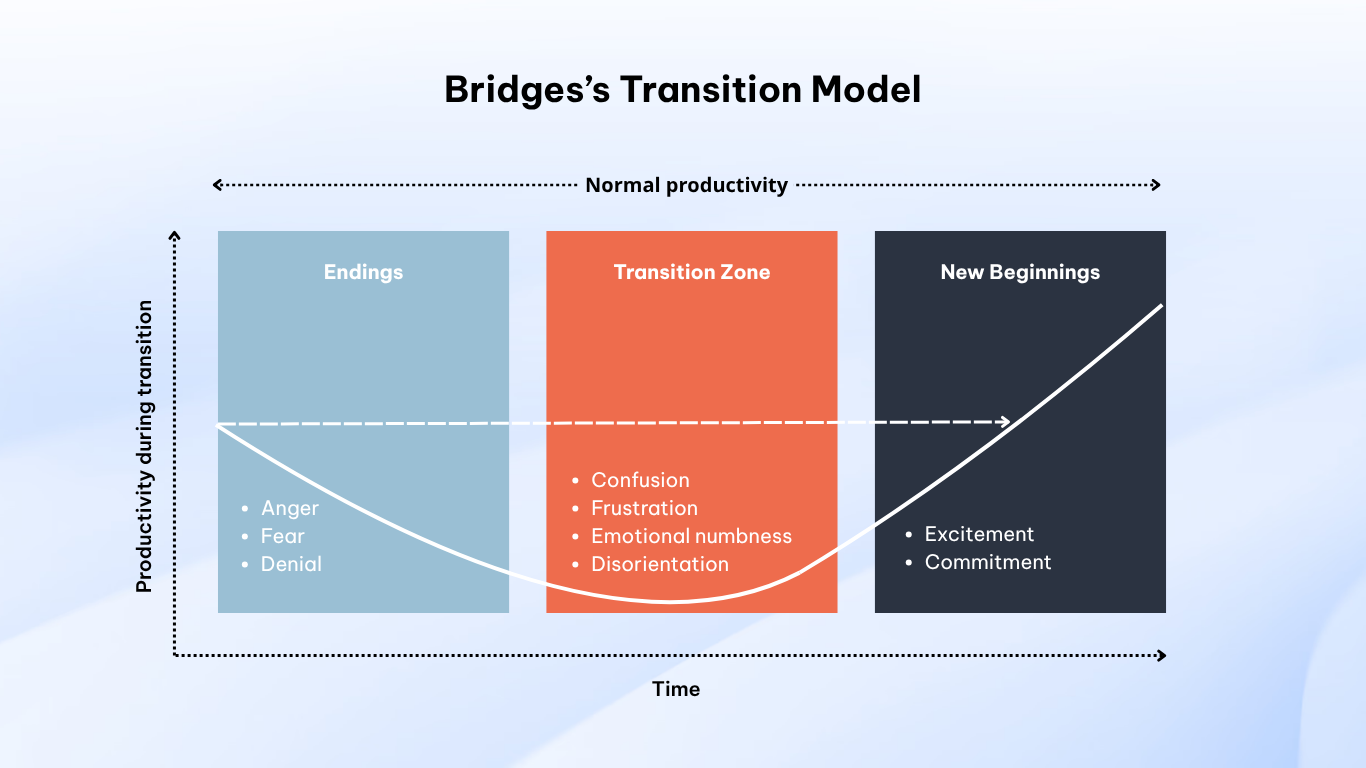
Moreover, the challenge is not limited to employees, it also lies with leadership. When managers continue relying on manual methods (such as Excel spreadsheets or fragmented reports), or fail to actively engage with new systems, digital transformation cannot cascade effectively across the organization.
Another critical factor is corporate culture. Organizations that discourage experimentation, fear mistakes, or lack internal communication tend to have higher failure rates. Digital transformation requires an open environment where employees are willing to learn, experiment, and continuously adapt.
→ Conclusion: If mindset does not change, even the most advanced technologies will struggle to deliver real value.
2. Lack of Clear Strategy and Leadership Commitment
One of the most common mistakes is that businesses embark on digital transformation without a clear strategy or without aligning it to specific business objectives.
Many organizations pursue digital transformation based on market trends or competitive pressure, rather than internal needs. As a result, they fail to clearly define “why transformation is needed,” “what it aims to achieve,” and “how success should be measured.”
In addition, leadership plays a decisive role. If top management is not directly involved, lacks long-term commitment, or is not aligned on the overall direction, projects can easily lose momentum and direction. Departments may operate in silos, coordination becomes weak, and ultimately no one takes full ownership of the outcome.
In practice, a common mistake is implementing technology before defining a strategy. This is often reflected in trend-driven software purchases, fragmented adoption of multiple tools, and the absence of clear performance metrics. As a consequence, systems fail to integrate, operations become fragmented, and investment costs continue to rise while delivering limited value.
→ Conclusion: Without a clear roadmap, digital transformation can quickly turn into a costly expense rather than a long-term value-generating investment.
3. Fragmented Technology and Siloed Data
While technology is not the primary cause of failure, it can significantly increase complexity if not implemented properly.
Many businesses still operate on legacy IT systems, with data scattered across multiple platforms (ERP, CRM, Excel, internal files, etc.), making integration difficult. When new tools are introduced, instead of improving efficiency, the system often becomes even more complicated and harder to manage.
A common issue is “data silos” where data is isolated across departments. This prevents organizations from having a single source of truth, leading to inaccurate or delayed decision-making.
Additionally, using too many standalone tools increases operational costs, integration expenses, and security risks. In many cases, businesses are not lacking technology - they are actually overloaded with tools but lacking a cohesive system.
→ Conclusion: The true value lies not in the number of tools, but in the level of integration and the ability to effectively leverage data.
4. Unstandardized Processes and Lack of Implementation Governance Capability
An often underestimated mistake is failing to standardize processes before digitization.
Many businesses rush to apply technology to processes that have not been optimized, resulting in the “digitalization of inefficiencies.” In such cases, new systems not only fail to improve productivity but also make operations more complex.
In addition, a lack of project governance capability is a major cause of failure. Digital transformation is a long-term initiative that requires progress management, risk control, cross-functional coordination, and continuous KPI tracking.
However, many organizations lack a dedicated team, do not establish a steering committee, or fail to adopt a proper change management framework. When issues arise, there is no clear ownership to resolve them, making projects prone to disruption or failure.
→ Conclusion: Technology is merely a tool - processes and governance are the true determinants of successful implementation.
How to Ensure Digital Transformation Doesn’t Become a Costly Waste
To make digital transformation a value-generating investment rather than a sunk cost, businesses need to shift their approach. Based on practical implementation experience, successful projects typically follow three core principles:
- Strategy-driven: Start with clear business objectives
- System-driven: Integrated operating system, not fragmented tools
- Adoption-driven: Focus on ensuring people actively use the system
Based on these principles, businesses should implement the following solution groups in a coordinated manner:
- Set data-driven goals aligned across departments: Organizations need to assess their true potential and define goals based on data. More importantly, senior leadership must be directly involved in setting the strategic direction, communicating it clearly, supporting execution, and sharing accountability with all departments.
- Build change management capabilities: Transformation outcomes depend more on employee mindset than on technology. According to Prosci, projects with strong change management practices are up to 7 times more likely to succeed. This includes having a clear communication plan, forming internal advocacy teams, providing timely training, and encouraging two-way feedback.
- Invest in training and talent development: Enhancing digital skills for existing employees while recruiting the right experts or partners is essential. Successful programs often allocate a significant portion of their budget to user enablement. Best practices include aligning training with project phases (e.g., train-the-trainer, learning through real projects) and establishing HR policies that incentivize innovation.
- Adopt a flexible technology platform: Prioritize scalable and customizable solutions. An integrated digital operations platform with low-code/no-code capabilities enables automation of core processes, seamless data integration, and AI-powered decision-making. Such flexibility allows businesses to “build” new features as needed, reducing dependency on IT teams. At the same time, designing a unified data architecture is crucial for leveraging data to drive business outcomes.
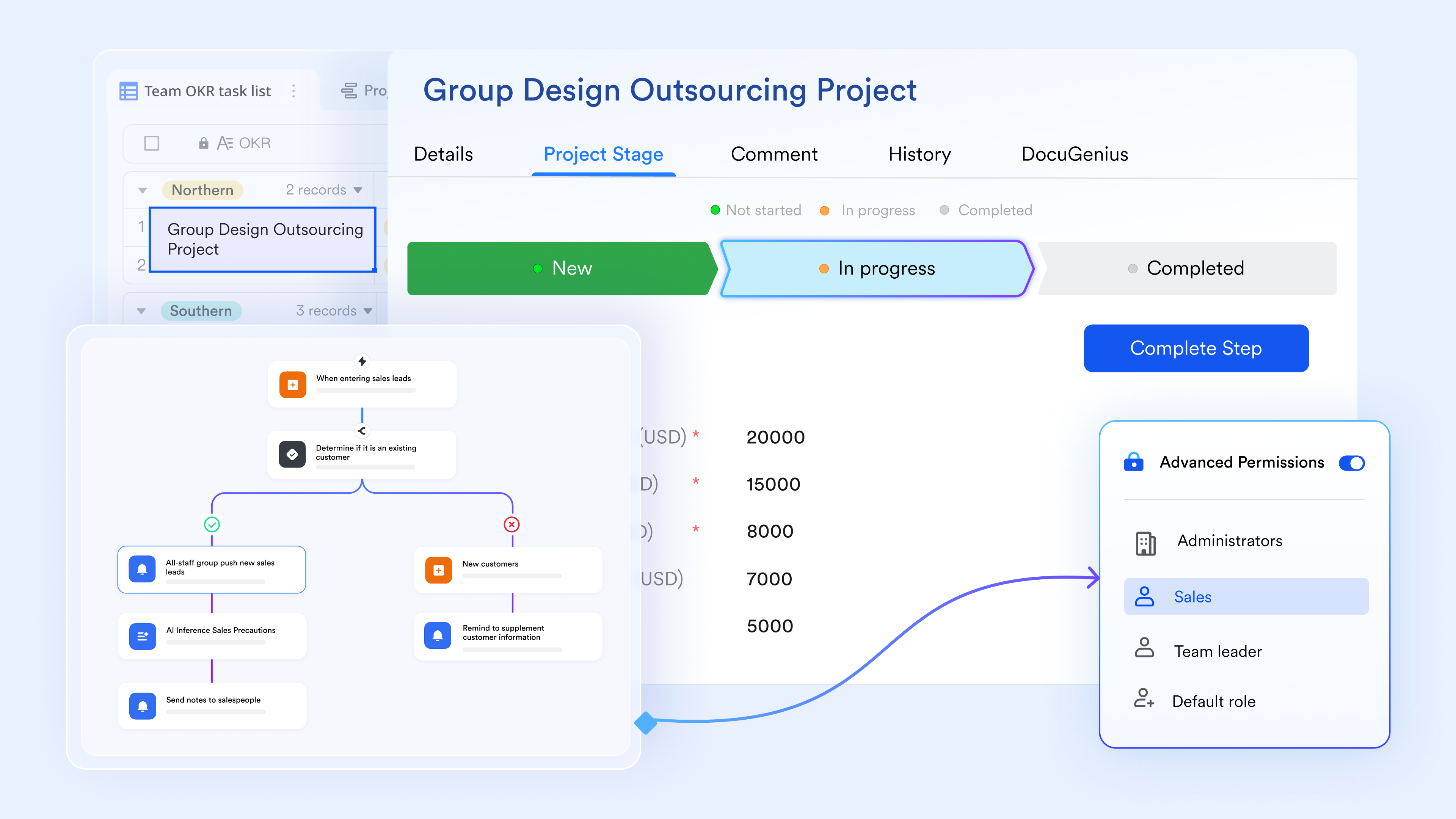
- Track KPIs and business outcomes: Establish a set of metrics to measure transformation effectiveness (e.g., % of automation, time/cost savings, user adoption rate of new systems) at each stage. Successful organizations continuously evaluate performance based on real data. This enables quick adjustments and ensures that digital transformation remains aligned with business objectives.
- Partner with experienced implementation providers: Digital transformation is a complex journey that requires both strategic vision and execution capability. Choosing the right partner helps businesses shorten implementation time, avoid common pitfalls, optimize investment costs, and ensure the system operates effectively.
UpBase x Lark: A Comprehensive Digital Transformation Solution for Businesses
Today, businesses have a wide range of options when starting their digital transformation journey, from standalone software (CRM, ERP, task management, internal communication tools, etc.) to specialized platforms for each department. However, this very “abundance of choices” often creates a bigger problem: the more tools are implemented, the more fragmented the system becomes, leading to siloed data and inconsistent processes.
In response to this “software maze” challenge, UpBase offers a different approach: digital transformation is not about adding more tools, but about unifying operations within a single system. Lark is an all-in-one platform that integrates essential management and collaboration functions such as chat, email, documents, calendars, workflows, task management, and OKRs into one unified ecosystem, while still allowing flexible customization based on business needs.

The core value of Lark lies in reducing tool complexity: businesses can operate on a single all-in-one platform instead of multiple fragmented software solutions. Internal tools (chat, email, documents, meetings, approvals, etc.) are tightly integrated, enabling seamless information sharing and standardized processes. As a result, Lark helps automate critical workflows and significantly save operational time.
As a Platinum partner of Lark, UpBase goes beyond platform implementation—we actively participate in redesigning the entire operating system for businesses: from analyzing current operations, standardizing processes, and building systems on Lark, to training and driving adoption across the organization. The goal is to ensure the system is effectively utilized and delivers real business value.
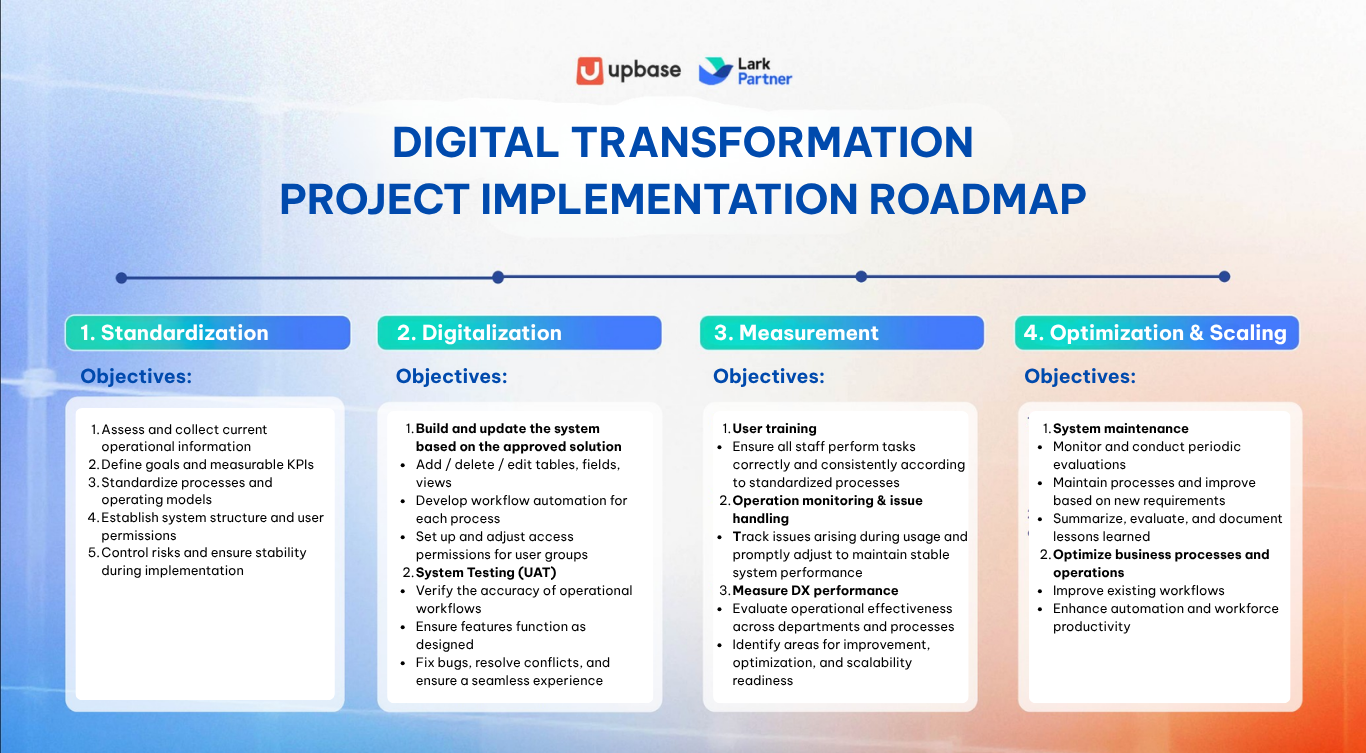
The UpBase x Lark solution is suitable for businesses of all sizes, from startups to large enterprises across various industries such as retail, manufacturing, distribution, and services. The implementation roadmap is designed in clear phases: standardization – digitization – measurement – optimization & scaling, enabling businesses to effectively control both progress and outcomes. Throughout this journey, UpBase supports organizations from strategic consulting to implementation and optimization, ensuring they achieve clear and sustainable ROI in a short time.
Read more: Implementing Lark for Businesses Experience from UpBase – Lark Platinum Partner
Contact UpBase to receive in-depth consultation on the UpBase x Lark solution, a comprehensive digital transformation approach and get a demo along with a tailored implementation roadmap that fits your operational model.
.jpg)




.svg)

.svg)