The Benefits of Digital Transformation in Business Management and Operations


In an increasingly competitive landscape and a rapidly changing market, businesses can no longer rely on traditional management models based on manual processes and fragmented data. This is why digital transformation has become an inevitable trend in long-term development strategies.
However, many organizations still struggle to clearly understand what value digital transformation brings and how it impacts their day-to-day operations. Therefore, this article explores the key benefits of digital transformation in business management and operations, supported by practical examples. It aims to help businesses better understand how technology can improve efficiency, optimize costs, and enhance competitiveness in today’s modern business environment.
Read more: What is Digital Transformation (DX) & Why It Matters
1. Digital Transformation Enables Process Optimization
One of the most evident benefits of digital transformation is the standardization and optimization of management processes. In traditional management models, many activities are still performed manually, such as order management, inventory tracking, and customer data handling. These processes often involve multiple intermediate steps, are prone to errors, and are time-consuming.
With digital transformation, complex manual processes can be automated and standardized. By designing workflows on digital platforms, businesses can eliminate bottlenecks, reduce errors, and accelerate processing speed.
To better understand the impact of digital transformation, consider how a procurement approval process changes before and after digitization.
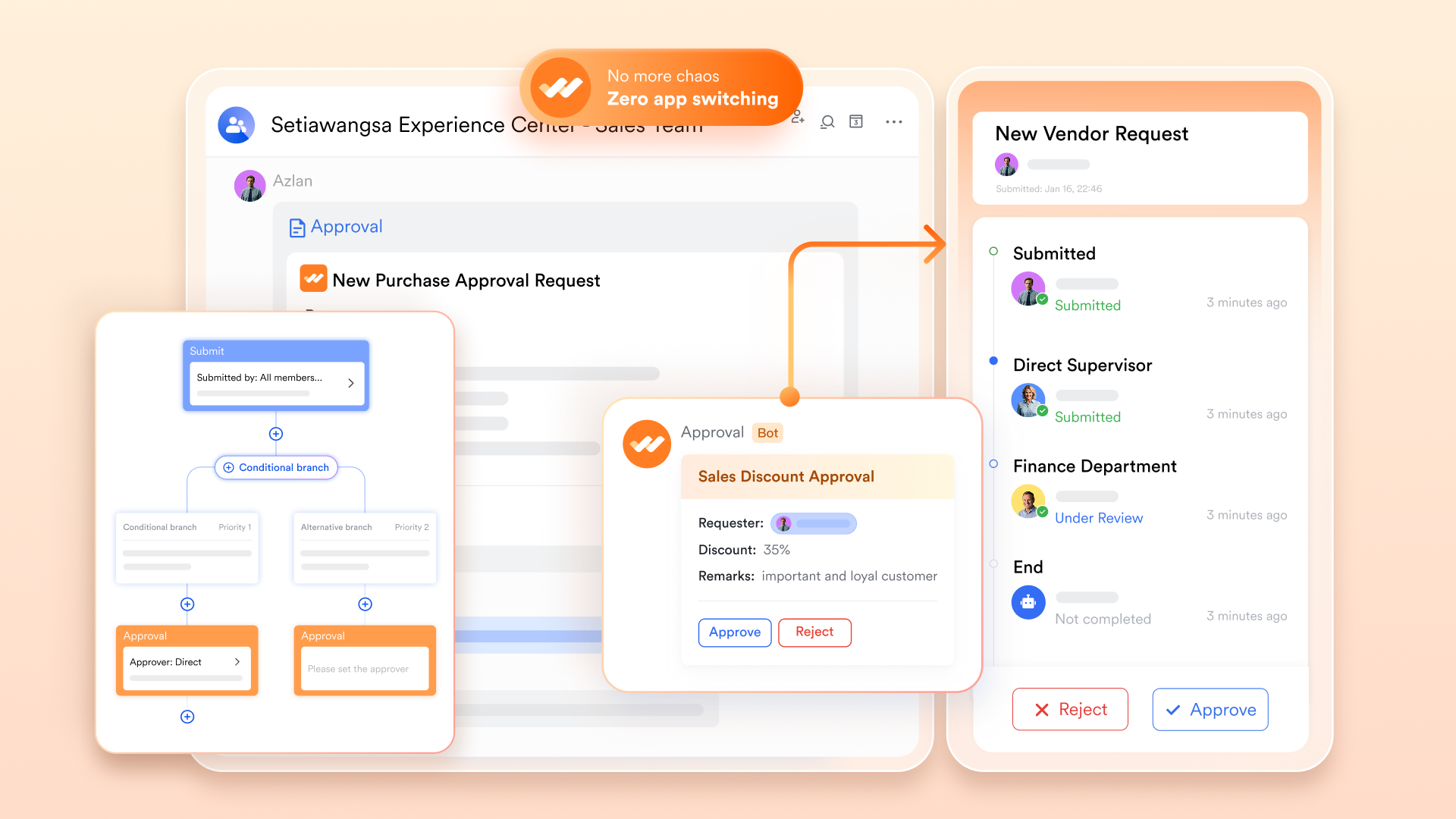
A notable example of digital transformation driving process optimization is the case of Cam Nguyen Group (Vietnam), with UpBase supporting the consulting and implementation process. Before the transformation, the company faced several limitations in internal management, particularly in processes such as contract approvals and inventory management, which relied heavily on manual work, lacked synchronization, and made real-time tracking difficult.
By implementing the Lark platform and redesigning operational workflows, UpBase helped Cam Nguyen fully digitize its processes, ensuring automation, transparency, and easier control. After just three months, the company achieved clear results:
- Contract approval time reduced from 1–2 days to 4–6 hours
- Inventory updated in real time, reducing stock shortages by 80%
- Cross-department errors decreased from ~5–7 cases/month to fewer than 1
- Administrative processing time reduced by 60%
These improvements not only optimized operational efficiency but also enhanced internal collaboration and decision-making speed. This is a clear example of how digital transformation, when implemented effectively, can deliver direct and measurable business impact.
Read the full case study: Cẩm Nguyên Group – Driving Efficiency with UpBase x Lark Digital Transformation
2. Digital Transformation Enables Data-Driven Decision-Making
In today’s business environment, the speed and accuracy of decision-making play a critical role in operational efficiency and competitiveness. However, in traditional models, many decisions are still based on personal experience or incomplete data, leading to risks of inaccuracy and delays.
Digital transformation enables businesses to shift from intuition-based decisions to data-driven decision-making. When data is collected, processed, and visualized in real time, managers can gain a more accurate and timely understanding of business operations.
Below is how decision-making processes change before and after adopting a centralized data system.
A typical example is how UpBase implements a multi-layered dashboard system on the Lark Base platform. In a B2B business model, sales cycles are often long, pipelines are complex, and multiple stakeholders are involved (BD, CS, Managers, and C-level executives). Therefore, tracking data at each management level is a critical factor in ensuring business performance.
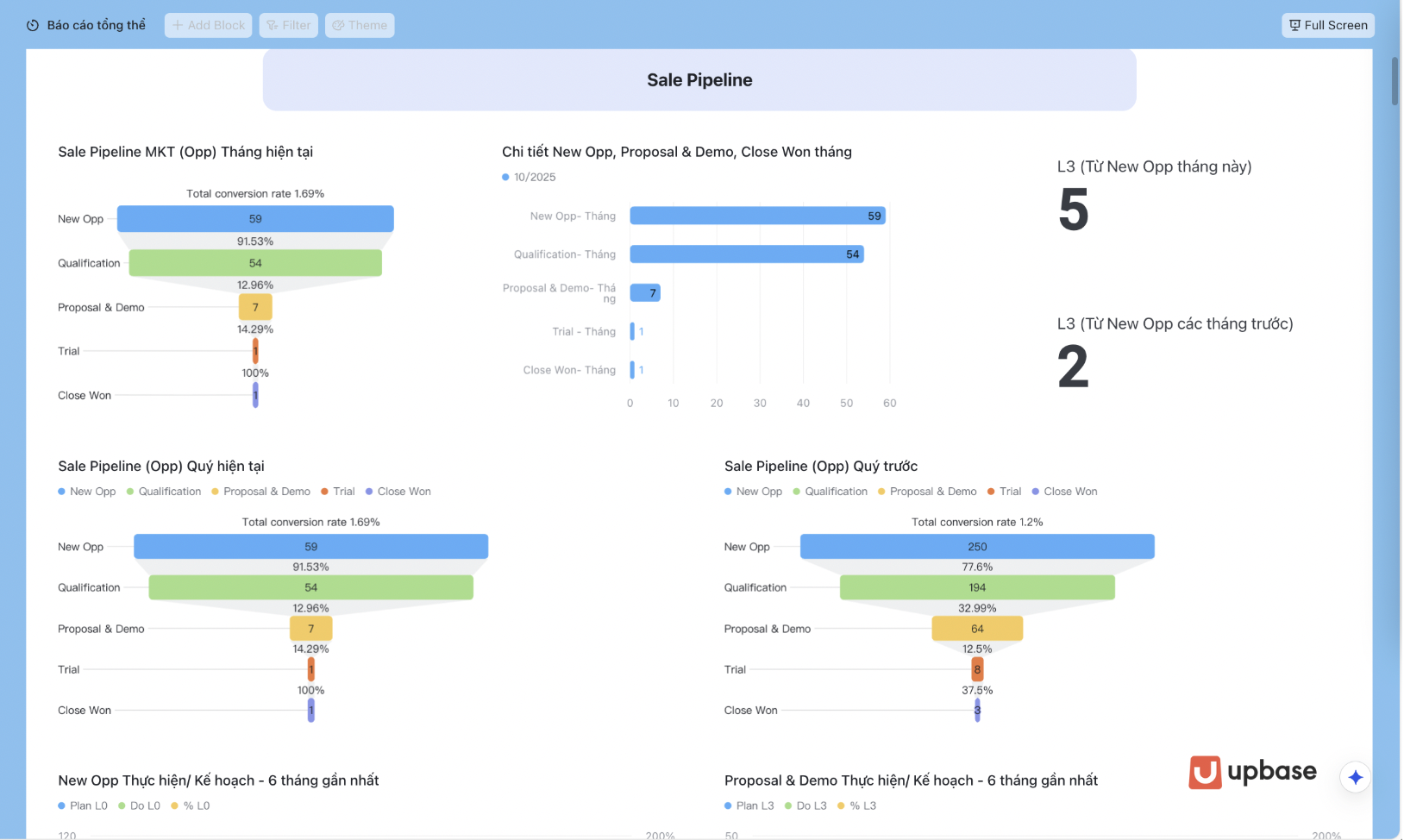
UpBase implemented a multi-layered dashboard system on the Lark Base platform for a B2B enterprise, enabling the synchronization of the entire sales pipeline and operations on a single platform:
- BD/CS Dashboard: Tracks lead volume, conversion rates, pipeline value, and contract status
- Manager Dashboard: Analyzes individual performance, stage progression speed, and projected monthly revenue
- C-level Dashboard: Aggregates ARR, Close Won rate, pipeline health, payment status, and contract expansion
With this system, all data is updated in real time and visualized clearly, completely eliminating the need for manual reporting. Employees no longer need to “check status via chat” across teams, as all information is available in real time within the pipeline. CEOs can grasp the entire business picture within the same day, instead of waiting for end-of-month reports as before. Executive decisions (pipeline adjustments, resource allocation, revenue forecasting) can be made 2–3 times faster.
3. Improve Efficiency & Reduce Operational Costs
In traditional operating models, many “hidden” costs still exist due to manual processes, lack of integration, and difficulty in measurement. Digital transformation helps businesses address this challenge by automating workflows, optimizing resources, and eliminating non-value-adding activities, thereby improving overall efficiency.
When processes are automated and connected on a unified platform, businesses not only operate more efficiently but also become more agile in collaboration and decision-making.
Lark Suite provides a tightly integrated ecosystem of tools that enables this operating model:
- Lark Messenger (group chat, messaging): Enables real-time communication across departments, reducing “communication silos” and minimizing information gaps
- Lark Meetings (video conferencing): Allows teams to hold meetings quickly and make decisions instantly, regardless of location
- Lark Docs/Sheets (documents, spreadsheets): Supports real-time collaboration, replacing fragmented emails and files → with version history tracking for easy review, comparison, and restoration when needed

By integrating all communication, documents, and workflows into a single platform, businesses can:
- Significantly reduce waiting time between process steps
- Minimize errors caused by transferring information across multiple tools
- Eliminate costs associated with email, paperwork, and fragmented software
Instead of relying on multiple separate systems (chat, email, files, CRM), businesses can operate on a unified platform, reducing overall operational costs (lower tool costs, fewer intermediary roles) and improving productivity through real-time information updates and sharing.
As a result, while digital transformation may require initial investment, it ultimately helps businesses optimize costs and increase long-term profitability.
4. Digital Transformation Enhances Business Scalability
As businesses grow, one of the biggest challenges is scaling operations without proportionally increasing costs and complexity. In traditional models, growth in customers, orders, or workforce often turns manual processes into bottlenecks, reducing efficiency and making operations harder to control.
Digital transformation enables businesses to scale more flexibly and non-linearly, while adapting quickly to market changes. With digital infrastructure, companies can serve a significantly larger customer base with minimal increases in workforce and operational costs. At the same time, processes, data, and tools are standardized and automated from the outset, making them easier to restructure and customize to meet evolving demands.
A notable example is Anna Eyewear retail chain, with UpBase supporting the digitization of its training management system as the company rapidly expanded its number of stores. Before the transformation, onboarding new employees at each location relied heavily on individual store managers, leading to:
- Inconsistent training content
- Difficulty maintaining service quality across stores
- Time-consuming onboarding when opening new branches
UpBase implemented a digital training management system, enabling Anna to standardize all training content (products, sales processes, customer service) and build clear learning paths for each role. As a result, the company achieved measurable improvements:
- Significantly reduced onboarding time for new employees (estimated ~40–50%)
- Consistent service standards across all store locations
- Easier scalability without proportionally increasing training costs

Unlike packaged CRM systems, UpBase’s solution allows businesses to modify pipeline structures, add new tables, or adjust workflows without rebuilding from scratch. As companies grow, operational changes can be quickly implemented directly within the system:
- When expanding to new customer segments (e.g., Partners), businesses can simply add new data structures and link them to existing pipelines.
- When launching new products/services, additional fields (such as Product Type) can be created along with dedicated approval workflows.
- When developing new business processes (such as Expansion or contract renewals), the system can replicate pipelines and generate reports for each renewal stage.
This is also one of the core advantages of Lark Base, enabling businesses to scale while maintaining standardization and speed.
5. The Benefits of Digital Transformation for Customer Experience
In an increasingly competitive landscape, customer experience is no longer a “nice-to-have” but a core competitive advantage for businesses. This is especially true in B2B models, where long sales cycles and high contract values make the end-to-end experience, from consultation to implementation to after-sales support, critical for customer retention and expansion.
Digital transformation enables businesses to build a seamless, personalized, and responsive customer journey by connecting data and processes within a unified system.
A centralized data system enables B2B businesses not only to manage customers more effectively but also to build a foundation for standardized processes, faster decision-making, and scalable growth with control.
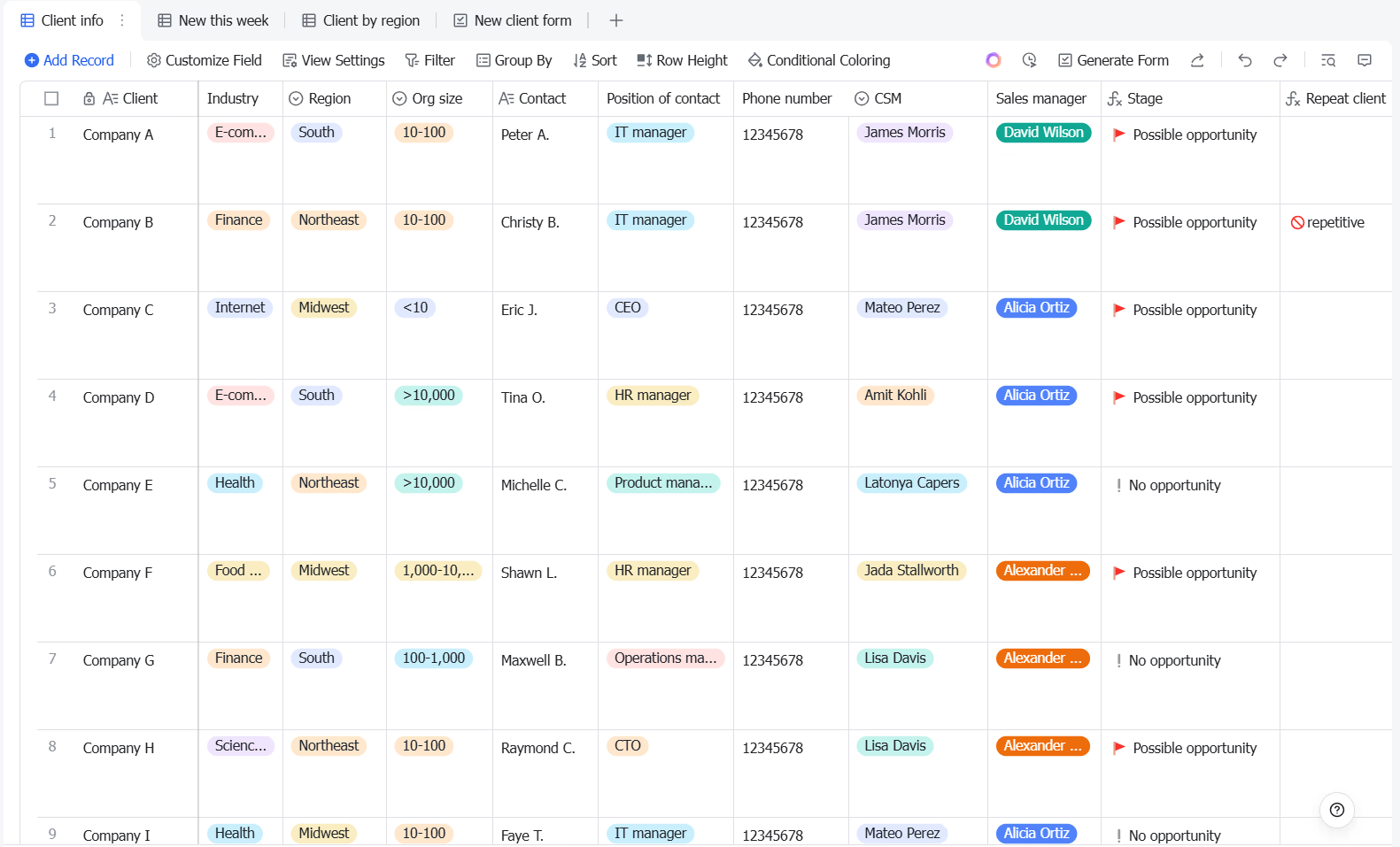
In addition to centralized data management, digital transformation also enhances customer experience through technologies that support interaction and personalization:
- 24/7 chatbots: provide instant responses to common inquiries, reducing wait times and improving customer satisfaction
- CRM systems with transaction history: enable businesses to better understand customer behavior, needs, and interaction history
- Marketing automation: automates and personalizes content for different customer segments and stages of the buying journey
These technologies not only help businesses respond faster but also create consistent and personalized experiences across all customer touchpoints. As a result, companies can build long-term relationships, increase engagement, and maximize customer lifetime value (LTV).
Where Should Businesses Start Digital Transformation?
Although the benefits of digital transformation are clear, many businesses still struggle with where to begin and how to implement it effectively. Digital transformation is not just about deploying new software, it is about restructuring how a business operates, manages data, and collaborates across departments.
In practice, digital transformation does not need to start with large-scale projects or heavy upfront investment. Instead, businesses should take a step-by-step, focused approach aligned with real business challenges.
UpBase, in partnership with Lark, provides digital transformation solutions that enable businesses to manage and operate efficiently on a unified platform. With extensive experience in implementing digital transformation for various businesses, UpBase not only provides tools but also offers strategic consulting and tailored implementation roadmaps for each business model. Start your digital transformation journey with UpBase x Lark today to optimize operations, enhance performance, and build a sustainable foundation for long-term growth.
.jpg)


.svg)

.svg)